
The same presses, pledged twice. Nothing could be valued until someone counted them once.
On a molding floor, the press, the robot on its platen, the dryer behind it and the mold in its clamp can each sit on a different lender's schedule. When that happens, the same steel gets counted twice and someone's collateral isn't there. An appraisal that values the schedule as written only puts a credential on the mistake.
On a molding operation the first question is what you are valuing. A press, its hot-runner controller, its robot and the mold in the clamp can be pledged as one machine to one party and as separate components to another. A schedule that never resolved that pledges some of the equipment twice. The appraisal resolves it first, with an asset list that counts each piece once, and only then puts a value on it.
BAZZLE appraises plastics manufacturing equipment across the country, from single-plant custom molders to multi-site operations that cross the border, for owners, lenders, receivers and trustees. The number carries the MCMEA behind it, held by fewer than 30 appraisers in the United States, and it is built on the molding floor, at the clamp end and in the tool crib.
Whole machines to one party. Components to the others.
A receivership brought me into a multi-site injection molding operation spanning the United States and Mexico. The same equipment had been pledged more than once. One party held a collateral position against whole machines, and other parties held separate per-piece positions against their components.
Nothing could be valued until that was untangled. We went machine by machine to decide what was genuinely part of the unit and what was a separable component, and built a true asset list before a single number went on it. Amanda worked parts of that job with me.
The equipment carried its highest value as a going concern. The cash flow to keep the plants running wasn't there, so the number that mattered was the one the market would actually pay on the way out.
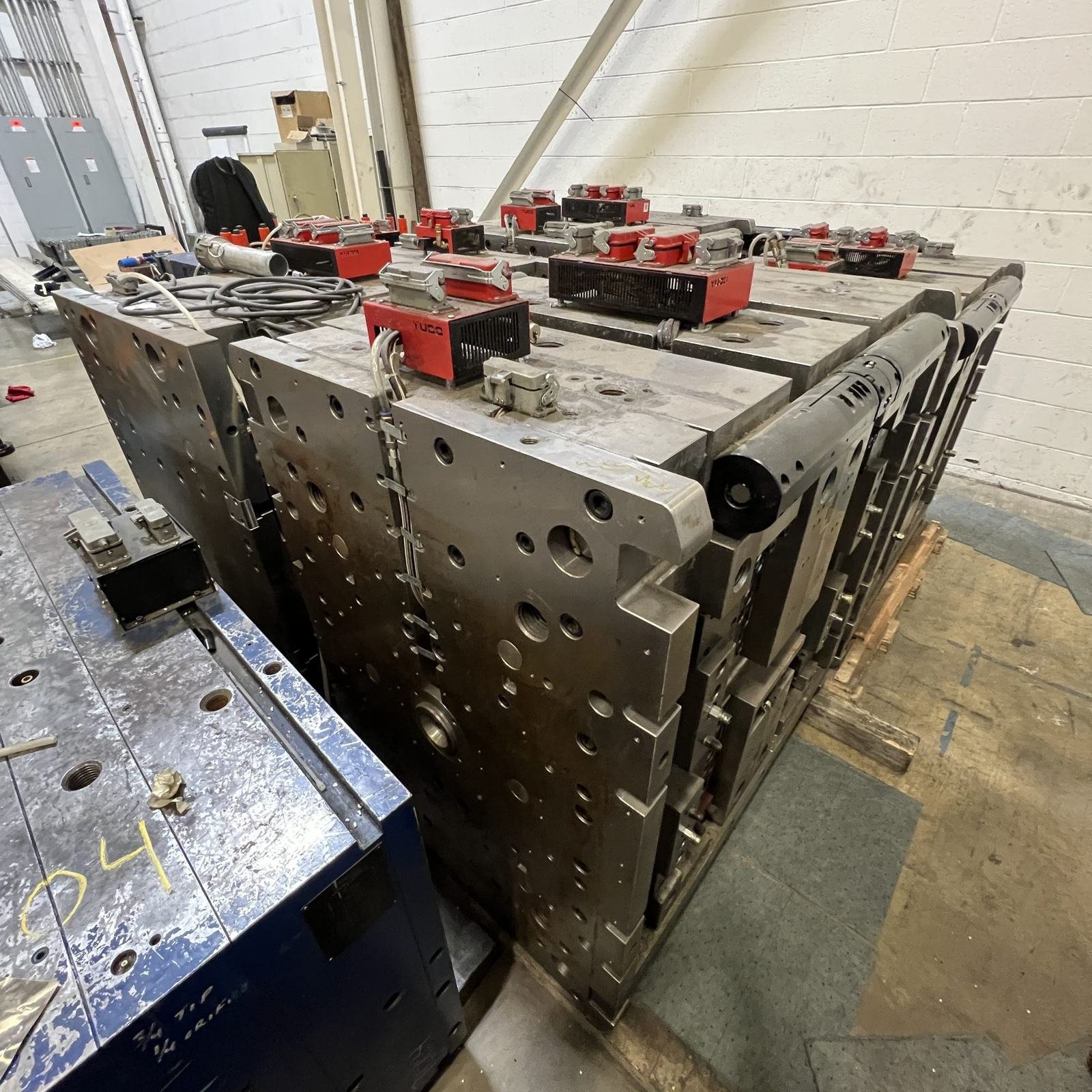
A collateral schedule copied from the books inherits every error in the books. One schedule carries the robot with the press; another carries it on its own line. Hot-runner controllers, temperature controllers and dryers float between the two. Molds ride at cost when many of them belong to the OEM customer. The books were built for depreciation, and depreciation never asks who holds the robot. When two parties believe they hold the same equipment, everyone who signed off on that schedule is exposed until someone counts what is actually on the floor.
Once the list is true, the market questions start. Standard presses in roughly the 50 to 700 ton range trade worldwide, strongest on all-electric and servo-hydraulic machines. An aging straight-hydraulic press carries an obsolescence discount its clamp rating doesn't show, and above about 2,000 tons the buyer pool thins while rigging costs climb. Tooling turns on a different question: a captive single-part mold is a P20 or H13 block once its program leaves, and a mold whose program transfers can be worth far more than its steel.
Presses, blow and PET lines, and the cell around them.
-
Injection presses & tooling
Injection molding machines from roughly 30 to 4,000-plus clamp tons: toggle and two-platen hydraulic, servo-hydraulic hybrid and all-electric, plus vertical, insert, two-shot, liquid-silicone and micro-molding presses. The tooling that runs on them: single-cavity through high-cavitation molds, hot-runner and cold-runner systems, and P20, H13 and stainless mold bases.
-
Blow molding & PET
Extrusion blow molding, continuous and accumulator-head, for bottles, jerricans, drums and industrial parts; injection and stretch blow for small and pharmaceutical containers; two-stage reheat stretch-blow lines; and high-cavitation PET preform systems, with the blow molds, preform and neck tooling each one carries.
-
Auxiliaries & material handling
Robots and end-of-arm tooling, sprue pickers and part-removal automation; desiccant dryers, gravimetric and volumetric blenders, central conveying and resin silos; mold-temperature controllers, chillers, cooling towers and hydraulic power units; granulators and regrind; compressors; and downstream leak testing, vision inspection, decorating and packaging.
Receiverships, refinancings, and the sale that has to close.
Most calls come at one of a handful of points. In a receivership, bankruptcy or workout, the receiver or trustee needs a liquidation number and a list of who holds what, and competing creditors will check both. In asset-based and equipment-secured lending, the hard case is the refinance, where the new lender needs to know what the old one already holds before it advances a dollar. In the sale or acquisition of a custom molder or a captive line, the customer-owned molds come off the asset list and the price has to follow them. A program loss or tooling pull idles presses, and an idle press is priced by the used market from that day forward. Insurance replacement schedules and claims need cost by machine, and partner buyouts and tax work need a number both sides can sign.
Fair Market Value as a going concern, Orderly Liquidation Value and Forced Liquidation Value can land far apart on a molding operation, and the purpose of the assignment picks the standard. In a distressed case the going-concern figure is often the one nobody can use. If the right standard is unclear, start with the value-type breakdown.
Molding equipment appraisals, answered plainly.
-
What if the same equipment is pledged twice?
Then the list gets fixed before anything is valued. I go machine by machine and decide what is part of the unit and what is a separable component, such as a robot, hot-runner controller or dryer. Each collateral position is matched to equipment that can be counted on the floor, and each piece carries one value.
-
Do you work receiverships and bankruptcies?
Yes. Receivers, trustees, restructuring counsel and the lenders behind them need a list competing creditors can check against the floor and a number buyers will actually pay. When the cash flow to keep plants running isn't there, Orderly or Forced Liquidation Value is usually the figure that gets used.
-
What plastics equipment do you appraise?
Injection presses from roughly 30 to 4,000-plus tons in every drive type, with their molds and hot-runner systems; extrusion, injection and stretch blow molding; PET preform systems; and the auxiliaries: robots, dryers, blenders, conveying and silos, temperature controllers, chillers, granulators and downstream inspection and packaging.
-
Are the molds the operator's collateral?
Often they are the customer's. On a custom molder's floor many molds were paid for by the OEM customer and belong to it. Owned molds are valued on whether their program can transfer; a captive mold whose program leaves is worth its steel less the cost to pull it.
-
Does drive type change a press's value?
Yes, often more than the model year. All-electric and servo-hydraulic presses hold value for their energy use and precision; an aging straight-hydraulic machine carries an obsolescence discount its tonnage doesn't show. Very large presses also face a thinner buyer pool and heavier rigging costs.
-
Which value type will the lender or receiver need?
The purpose of the assignment decides it. Buyers and sellers negotiate over Fair Market Value. A lender holding molding equipment as collateral asks for Orderly Liquidation Value, with Forced as the floor. In a receivership where the plants can't keep running, the liquidation figures are the ones that get used, and the report names the standard it applied.
How many of your presses sit on two schedules?
Send the plant list, the collateral schedules written against it, and who the number is for. Scoping starts by laying one over the other.
USPAP-compliant · MCMEA-credentialed · Injection · Blow & PET · Tooling ownership