
In an acquisition, the equipment on the balance sheet is a number both sides are pressure-testing.
When you buy or sell an equipment-intensive operation, the machinery is usually the largest tangible asset in the deal — and its value moves the price, the financing, and the post-close accounting all at once. This guide covers why an acquisition triggers an equipment appraisal, how the value premise changes the number, where it fits in purchase price allocation, and how to keep the equipment from becoming the thing that reopens the negotiation.
In M&A, equipment value drives three numbers: the price, the acquisition financing, and the post-close purchase price allocation. The seller's book value reflects tax depreciation, not market value, so it can't carry any of them. A credentialed, independent appraisal — set to the correct value premise and effective date — gives both sides a defensible number before the deal is priced, and one that holds up in allocation afterward.
The equipment is the part of the deal where the gap between the balance-sheet number and reality tends to be widest, in either direction. Fully-depreciated iron that's still earning can be worth far more than the schedule says; specialized equipment approaching obsolescence can be worth far less. An acquisition that prices the equipment off the seller's schedule is pricing off a number built for the IRS, not for the transaction.
One asset, three places the number has to hold.
The price. During diligence, both sides are testing what the equipment is actually worth. An independent appraisal gives the buyer confidence in what they're paying for and gives the seller a credentialed basis to defend the asking price instead of conceding to the buyer's read.
The financing. If the acquirer is borrowing against the assets, the lender underwrites the equipment as collateral and will want a current, USPAP-compliant appraisal to do it. A number produced for the deal that also satisfies the lender saves a second engagement and keeps the financing on schedule.
The allocation. After close, the purchase price is allocated across the acquired assets at fair value for accounting and tax. Machinery and equipment is usually a significant piece of that, and a documented, credentialed appraisal is what auditors and tax authorities expect behind it — not a round-number estimate that draws questions in year two.
Value in continued use vs. value in exchange.
The single choice that moves the equipment number most in a deal is the value premise, and it follows directly from the deal structure.
Value in continued use assumes the equipment stays in place and keeps producing as part of a going concern. It reflects an installed, integrated, operating asset base — the machine doing its job where it sits. Value in exchange assumes the equipment is removed and sold, piece by piece, into the open market.
The same asset can carry a materially different value under each premise. A processing line that's valuable installed and running may be worth a fraction of that if it has to be dismantled and sold off. When you're buying a going concern, continued-use is usually the right premise; when the plan is to wind down or part out, exchange or liquidation value applies. Getting this wrong doesn't produce a slightly-off number — it produces the wrong number entirely, and it should be stated explicitly in the report so everyone is pricing the same thing.
Clean asset data compresses the whole timeline.
Deals slow down when the target's asset records are a mess — missing serials, no hours, equipment logged as "miscellaneous," no clarity on what's owned versus leased. Every gap becomes a diligence question, and diligence questions become schedule risk. Arriving with a structured asset list turns weeks of back-and-forth into a clean starting point.
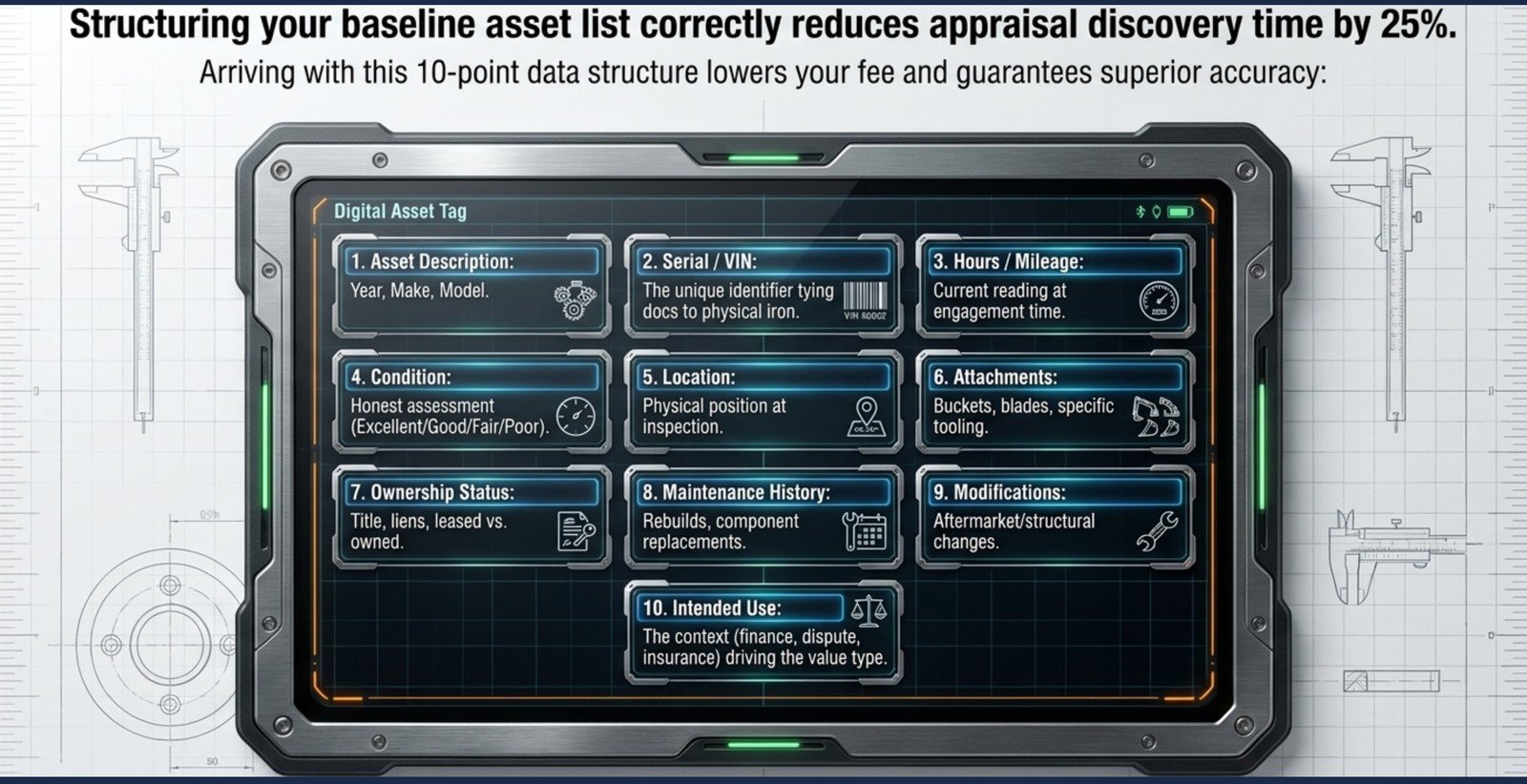
Ownership status matters more in a deal than anywhere else: title, liens, and leased-versus-owned determine what actually transfers and what the lender can secure. A clean list built around these ten points is the difference between diligence that runs on rails and diligence that stalls on the equipment schedule.
An unreliable equipment number ripples through the whole deal.
Specialized mining, energy, and heavy-industrial equipment trades in thin markets with limited comparable data. That's exactly where a generalist's number is most likely to be wrong — and in an acquisition, a wrong equipment number doesn't stay contained. It flows into the price, the financing, and the allocation, and it becomes a place the other side's advisors probe for weakness or leverage for renegotiation.
There are 26 Master Certified Machinery & Equipment Appraisers in the United States. In a transaction where the equipment carries real weight, class-specific experience and a credentialed, documented methodology are what make the number survive diligence, audit, and — if the deal is ever disputed — the adversarial scrutiny that follows.
M&A equipment appraisals — straight answers.
-
Why do you need an equipment appraisal for an acquisition?
In an equipment-intensive deal, the machinery is often the largest tangible asset, and its value drives the price, the acquisition financing, and the post-close allocation. The seller's book value reflects tax depreciation, not market value, so it can't carry any of them. A credentialed, independent appraisal gives both sides a defensible number.
-
Value in continued use vs. value in exchange?
Continued use assumes the equipment stays installed and producing as a going concern. Exchange assumes it's removed and sold piecemeal. The same machine can be worth materially different amounts under each. The deal structure — going concern or wind-down — determines which premise is correct, and it should be stated explicitly.
-
What is purchase price allocation, and how does equipment fit?
After close, total consideration is allocated across acquired assets at fair value for accounting and tax. Machinery and equipment is usually a significant piece. A credentialed appraisal supports the equipment portion with documented fair value by asset — what auditors and tax authorities expect, rather than a round number that invites questions.
-
When should the appraisal happen?
Ideally during diligence, before the price is locked, so it informs the negotiation and surfaces any gap while there's room to react. A valuation as of the closing date is then often done to support allocation. Doing it only after close means pricing the deal on numbers nobody verified.
-
Who commissions it — buyer or seller?
Either, and both have reasons to. A buyer wants an independent read on what they're paying and financing; a seller wants a credentialed number to defend the price. Because the appraiser's role is independent, a defensible opinion serves the deal even when one side commissions it — it's built to withstand the other side's scrutiny.
-
How does specialized equipment affect diligence?
Specialized iron trades in thin markets with limited comparables, so it's easy to value wrong and hard to defend without class-specific experience. A shaky number ripples into price, financing, and allocation. Clean, structured asset data plus a credentialed appraiser compresses diligence and removes a common source of last-minute renegotiation.
Price the deal on a number that survives diligence.
Fifteen minutes to scope it — the asset base, the deal structure, the value premise, and your timeline. You get a credentialed appraisal that holds through negotiation, financing, and allocation.
USPAP-compliant · MCMEA-credentialed · One of 26 in the U.S.