
After the deal closes, the equipment has to be carried at fair value — and the auditor will ask how you got there.
When an acquisition closes, accounting rules require the total consideration to be allocated across the assets acquired at their fair values, and for equipment-intensive businesses the machinery and equipment is usually one of the largest pieces of that allocation. This guide covers what purchase price allocation requires for equipment, what value premise applies, and why a documented, credentialed appraisal is what the audit expects behind the number.
Under ASC 805, the consideration paid in an acquisition is allocated across the acquired assets at fair value, and machinery and equipment is typically a major component. A credentialed appraisal provides asset-level fair value with documented methodology — the support auditors and tax authorities expect — rather than a round-number plug that draws questions at year-end.
Purchase price allocation is where the equipment number stops being a negotiating position and becomes a booked, audited balance-sheet figure that drives depreciation and, through Section 1060, tax basis. A number nobody can support is a number the auditor will make you revisit — usually at the worst time in the reporting calendar.
Fair value, asset by asset, that the audit can rely on.
ASC 805 requires acquired assets and assumed liabilities to be recognized at fair value as of the acquisition date. Equipment carried at the seller's depreciated book value is almost never at fair value — book reflects tax and accounting depreciation, not what the market would pay — so it has to be re-measured.
That re-measurement flows into everything downstream: the depreciation the buyer will book going forward, the goodwill that falls out as a residual, and, for tax purposes under Section 1060, the basis in the acquired assets. A soft equipment number distorts all of it, which is exactly why auditors scrutinize it.
Fair value under ASC 820 — usually in continued use.
Fair value for financial reporting follows ASC 820: the price to sell the asset in an orderly transaction between market participants, considering the asset's highest and best use. For operating equipment acquired as part of a going concern, that generally means value in continued use — the installed, integrated asset doing its job, not a piece pulled out and sold alone.
That premise matters because it can differ materially from a liquidation or in-exchange number. Stating and supporting the correct premise is central to a defensible allocation, and it should be explicit in the appraisal so the auditor and the buyer are measuring the same thing.
Documented fair value, down to the asset.
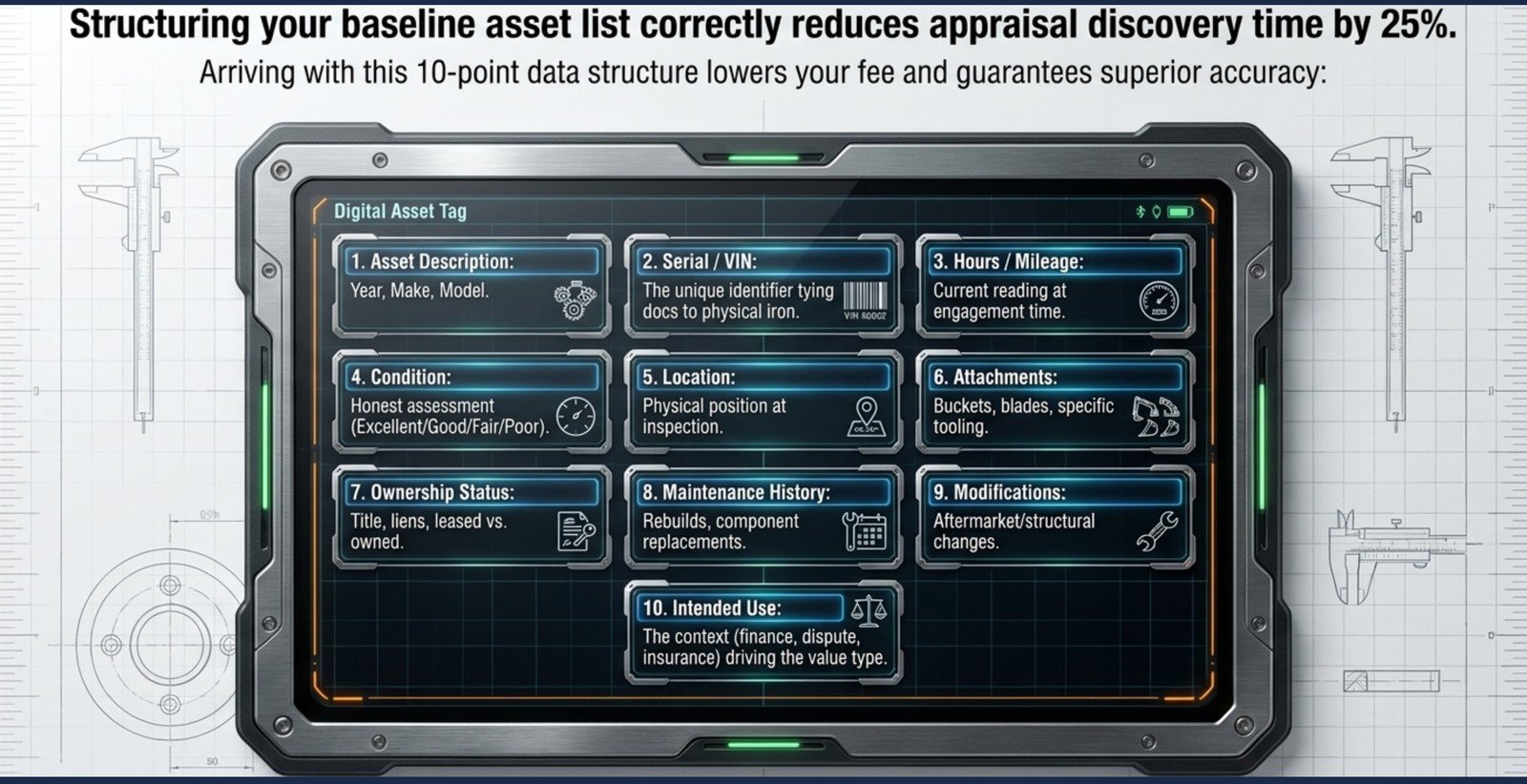
An allocation the audit will accept isn't a single equipment total — it's fair value developed and documented at the asset level: descriptions, condition, the valuation approach and market data behind each conclusion, the premise, and the effective date, all under a credentialed, USPAP-compliant signature.
This is the same value premise and report discipline that supports the equipment side of an M&A transaction — the difference is timing and purpose: the diligence appraisal informs the price before close, and the allocation appraisal fixes fair value as of the closing date for the books and the tax return.
Auditors probe the equipment number that isn't supported.
Specialized mining, energy, and industrial equipment is precisely where a fair-value conclusion is hard to defend without class-specific experience — thin markets, few comparables, and premises that are easy to get wrong. That's the number an auditor circles.
There are 26 Master Certified Machinery & Equipment Appraisers in the United States. A credentialed appraisal of the equipment component gives the deal team, the auditor, and the tax preparer a fair-value number that holds through the year-end audit and beyond.
Purchase price allocation appraisals — straight answers.
-
What is purchase price allocation?
After an acquisition, ASC 805 requires the total consideration to be allocated across the acquired assets at fair value. Machinery and equipment is usually a significant component, and a credentialed appraisal establishes its fair value asset by asset for the buyer's books and, under Section 1060, its tax basis.
-
What value premise applies?
Fair value under ASC 820, considering highest and best use. For operating equipment acquired as part of a going concern, that generally means value in continued use — the installed, integrated asset — which can differ materially from a liquidation or in-exchange value.
-
Why not use the seller's book value?
Book value reflects tax and accounting depreciation, not fair value, so it's almost never what the market would pay. ASC 805 requires re-measurement to fair value, and using book value distorts the buyer's go-forward depreciation, the residual goodwill, and the tax basis.
-
When should it be done?
Fair value is measured as of the acquisition date, so the allocation appraisal is typically performed after close as of that date. It's distinct from the diligence appraisal that informs the price before close, though both use the same discipline.
-
What does the auditor want to see?
Asset-level fair value: descriptions and condition, the valuation approach and market data behind each conclusion, the stated premise, the effective date, and a credentialed, USPAP-compliant signature. A documented, asset-by-asset appraisal is what clears audit scrutiny.
-
How does it relate to the M&A appraisal?
Same value discipline, different timing and purpose. The diligence appraisal informs the negotiated price before close; the allocation appraisal fixes fair value as of the closing date for financial reporting and tax. A deal often uses both.
Book fair value on a number the audit accepts.
Fifteen minutes to scope it — the acquired asset base, the closing date, and the reporting timeline. You get a documented, asset-level fair-value appraisal built for ASC 805.
USPAP-compliant · MCMEA-credentialed · One of 26 in the U.S.