
A cost segregation study is only as strong as the equipment values behind the breakout.
A cost segregation study moves parts of a property into shorter tax lives so depreciation comes sooner. When a facility holds significant installed machinery, or was bought with its equipment for one price, the equipment values carry much of the benefit. This guide covers what the study does, where an equipment appraisal supports it, and what holds up if the schedule is examined.
A cost segregation study separates personal property and land improvements from the building so those components depreciate over 5, 7, or 15 years under MACRS instead of 27.5 or 39. When the breakout turns on what installed equipment is worth, a credentialed equipment appraisal gives those values a documented basis the study and the preparer can point to.
Accelerated depreciation is real cash in the early years, which is why the IRS looks at how the breakout was built.
Shorter-life assets are where the benefit sits.
Cost segregation identifies components that qualify as personal property or land improvements, and moves them onto 5-, 7-, or 15-year lives. In a plant with processing lines, installed machinery, or specialized systems, that equipment is often the largest share of what gets reclassified.
When a facility is bought with its equipment for one price, the split between building and equipment drives the result. A value traced to the assets themselves holds up better than a split pulled from the closing statement.
The study classifies. The appraisal values.
A cost segregation study is an engineering-based tax analysis, usually prepared by a CPA or a specialty firm, and it is not an appraisal. Where the breakout depends on equipment value, in a purchase-price allocation, a used-asset acquisition, or a plant with heavy installed machinery, a credentialed M&E appraisal supplies those values.
If the IRS tests the allocation, a signed appraisal of the equipment is stronger support than an internal estimate.
Equipment values the schedule can stand on.
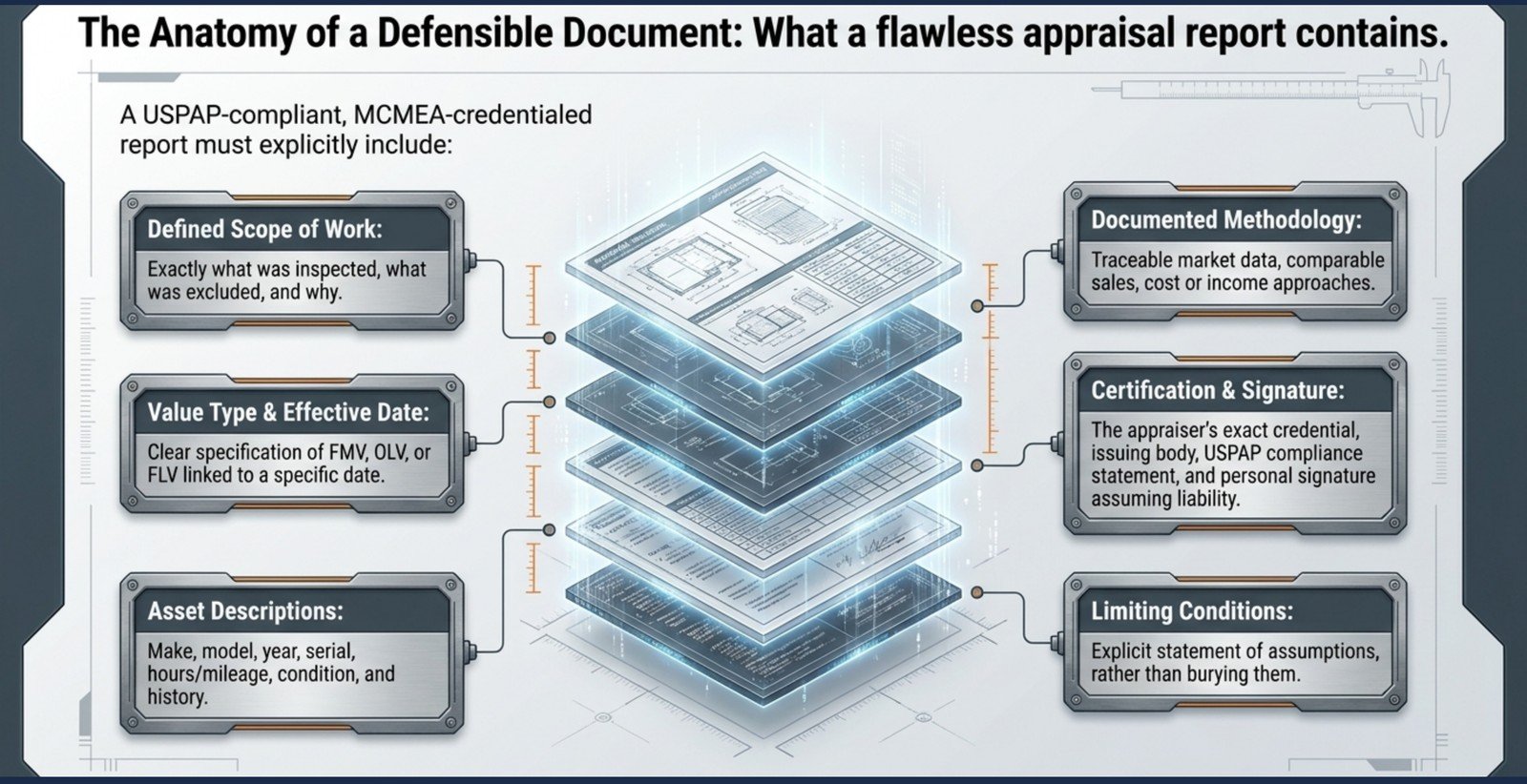
Equipment values supporting a cost segregation breakout identify and inspect the assets, state the value standard and effective date, show the market evidence, and carry the appraiser's credential and signature.
Installed equipment gets valued as equipment.
Putting a supportable number on a processing line or a bank of presses means knowing the asset class and its market. Spreading a lump-sum purchase price across categories by formula skips that step.
Nathan Bazzle is one of 26 Master Certified Machinery & Equipment Appraisers in the United States.
Cost segregation and equipment values, straight answers.
-
Is a cost segregation study an appraisal?
No. It is an engineering-based tax analysis. An equipment appraisal is a separate piece that supports the values of the machinery the study reclassifies.
-
Where does an appraisal help?
Where the breakout turns on what the equipment is worth, such as a purchase-price allocation after an acquisition or a facility with significant installed machinery.
-
What asset lives are involved?
Qualifying components move onto 5-, 7-, or 15-year MACRS lives instead of the 27.5- or 39-year schedule for the building.
-
Does it help on an acquisition?
Yes. When a facility and its equipment are bought together, an appraisal of the equipment supports the allocation of the price to the personal-property components.
-
Will the IRS accept the breakout?
That depends on the support behind it. A credentialed, independent equipment appraisal strengthens the position if the schedule is examined.
-
Is this tax advice?
No. The study and the tax position stay with your CPA or cost segregation firm. The appraisal supplies values for the equipment they reclassify.
Put supported equipment values under the breakout.
Fifteen minutes to scope it: the facility, the equipment, and the study it supports. You get a credentialed appraisal of the equipment values the schedule relies on.
USPAP-compliant · MCMEA-credentialed · One of 26 in the U.S.