
Under Sarbanes-Oxley, an equipment fair value sits inside management's internal control over financial reporting.
Public companies measure equipment at fair value in acquisitions, impairments, and fresh-start reporting, and those measurements fall under ASC 820 and the internal controls Sarbanes-Oxley requires. Specialized equipment rarely has a quoted price, so its fair value usually rests on judgment. This guide covers how ASC 820 measures equipment fair value and what support the control environment expects behind it.
ASC 820 defines fair value as an exit price and sorts measurement inputs into three levels. Specialized equipment often lands in Level 3, the tier built on unobservable inputs. Under Sarbanes-Oxley, management owns the controls over those measurements. A credentialed equipment appraisal gives a Level 3 fair value documented, independent support an auditor can test.
A Level 3 measurement is management's responsibility and the auditor's focus at the same time. Both look at the evidence behind it.
Equipment fair value runs through the financials.
Fair-value measurements of equipment come up in purchase-price allocations for business combinations, in impairment write-downs, and in fresh-start reporting after a reorganization. Each is measured under ASC 820, which defines fair value as the price to sell the asset in an orderly transaction between market participants.
Specialized industrial equipment rarely has a quoted price, so its fair value is built from market evidence and appraisal methodology. That often puts it in Level 3, the tier with the most measurement uncertainty and the most disclosure.
A control is only as strong as its evidence.
Sarbanes-Oxley requires management to maintain and assess internal control over financial reporting, and larger public companies also need their auditor to attest to it. Fair-value measurements fall within those controls. A Level 3 equipment value resting on an undocumented internal estimate gives the auditor little to test.
An independent appraisal adds a stated methodology, a documented market basis, and a qualified, identifiable signer, which are the pieces a control review looks for.
Fair value with an audit trail.
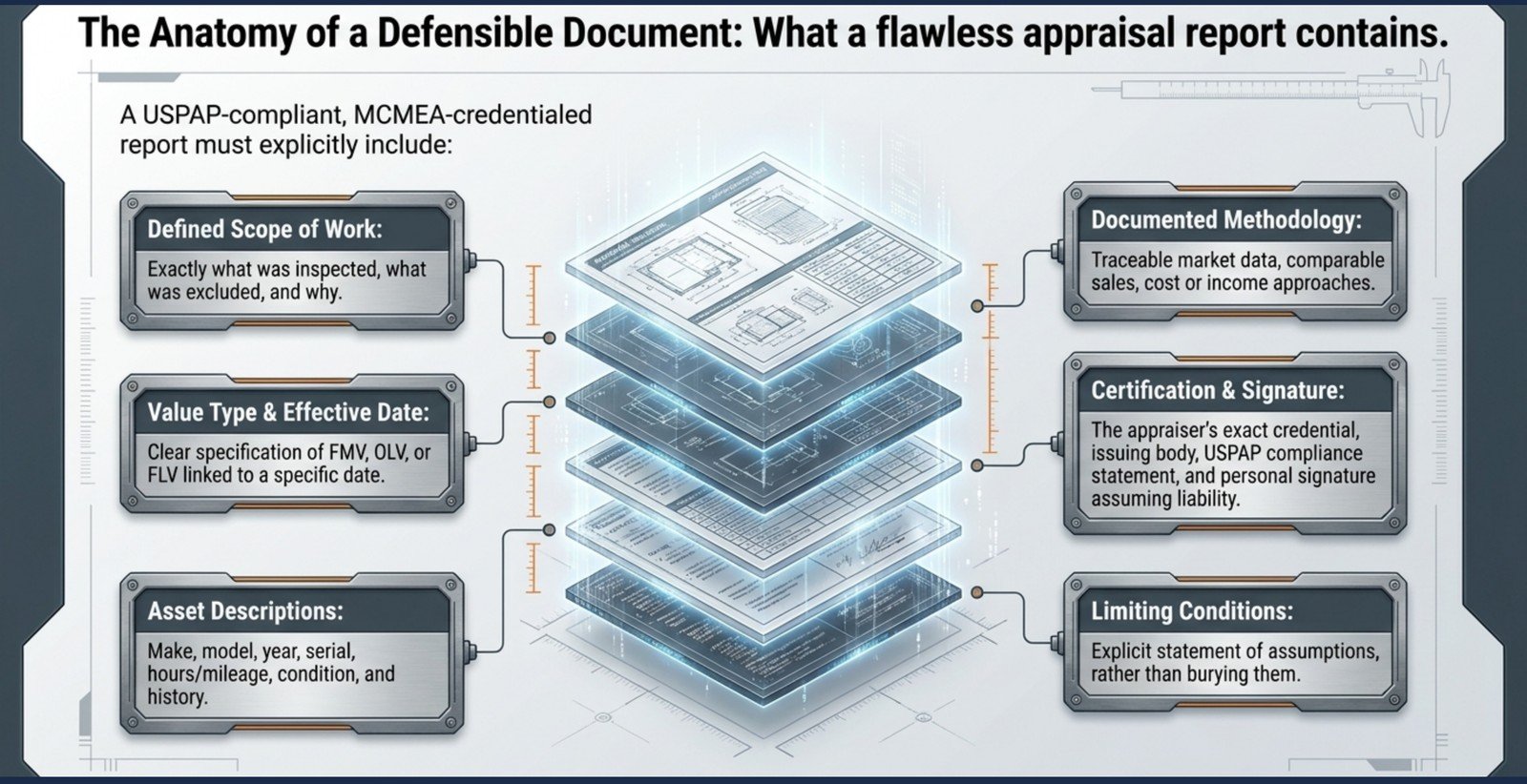
A fair-value appraisal for reporting identifies and inspects the equipment, states fair value under ASC 820 with the measurement date as the effective date, shows the market evidence and methodology, and carries the appraiser's credential and signature.
Level 3 equipment values are a specialist's work.
Building a fair value for specialized equipment means knowing the market for those assets and the valuation approaches ASC 820 recognizes, in the part of the hierarchy with no quoted price to lean on. An internal estimate is the measurement auditors question first.
Nathan Bazzle is one of 26 Master Certified Machinery & Equipment Appraisers in the United States.
ASC 820 and SOX fair-value appraisals, straight answers.
-
What is ASC 820?
The accounting standard that defines fair value as an exit price in an orderly transaction and sorts measurement inputs into a three-level hierarchy.
-
What is a Level 3 input?
An unobservable input used when no quoted or directly comparable price exists. Specialized equipment fair values often fall into Level 3.
-
How does SOX relate?
SOX requires management to maintain internal control over financial reporting, and fair-value measurements are among the areas those controls cover.
-
When does equipment fair value come up?
In purchase-price allocations for a business combination, in impairment write-downs, and in fresh-start reporting after a reorganization.
-
Why a third-party appraisal?
Because the control rests on evidence. A documented, independent appraisal gives a Level 3 measurement support an auditor can test.
-
Is this accounting advice?
No. The reporting and the controls stay with your team and the auditor. The appraisal supplies the equipment fair value the measurement relies on.
Put documented support behind the Level 3 number.
Fifteen minutes to scope it: the reporting event, the equipment, and the measurement date. You get a credentialed ASC 820 fair-value appraisal management and the auditor can evaluate.
USPAP-compliant · MCMEA-credentialed · One of 26 in the U.S.