
An ESOP's annual valuation is only as defensible as the equipment values under it.
An ESOP that holds stock in an equipment-intensive company is valued at least once a year, and the machinery is a real part of that value. The Department of Labor reviews these valuations closely, and the trustee carries the exposure. This guide covers where an equipment appraisal fits inside the annual ESOP valuation and why DOL scrutiny raises the bar on the asset values feeding it.
ESOP shares in a privately held company are valued at least annually by an independent appraiser, and the plan cannot pay more than adequate consideration, which ERISA defines for unlisted stock as fair market value determined in good faith by the trustee or named fiduciary. In an equipment-heavy company, the machinery is a meaningful part of that value. A credentialed M&E appraisal gives the business valuation a supported equipment component.
The business valuation professional values the company. The equipment inside it still has to be valued by someone who values equipment.
Annual, and under a regulator's eye.
An ESOP holding stock that is not publicly traded needs an independent valuation of that stock at least once a year, and ERISA bars the plan from paying more than adequate consideration when it buys shares. For an equipment-intensive company the machinery is a component of enterprise value, and an asset-based view often informs or cross-checks the conclusion.
The Department of Labor has made ESOP valuations an enforcement focus. When the asset side rests on book figures instead of market-based equipment values, a regulator or a plaintiff has something to press.
Adequate consideration starts with supportable inputs.
Adequate consideration holds the trustee to a good-faith, documented determination of fair market value. Where equipment is a large part of the company, that determination depends partly on the equipment being valued by someone qualified to value it, to a stated standard and effective date.
A credentialed M&E appraisal gives the valuation firm and the trustee a supported input and a clean file.
An equipment component the trustee can defend.
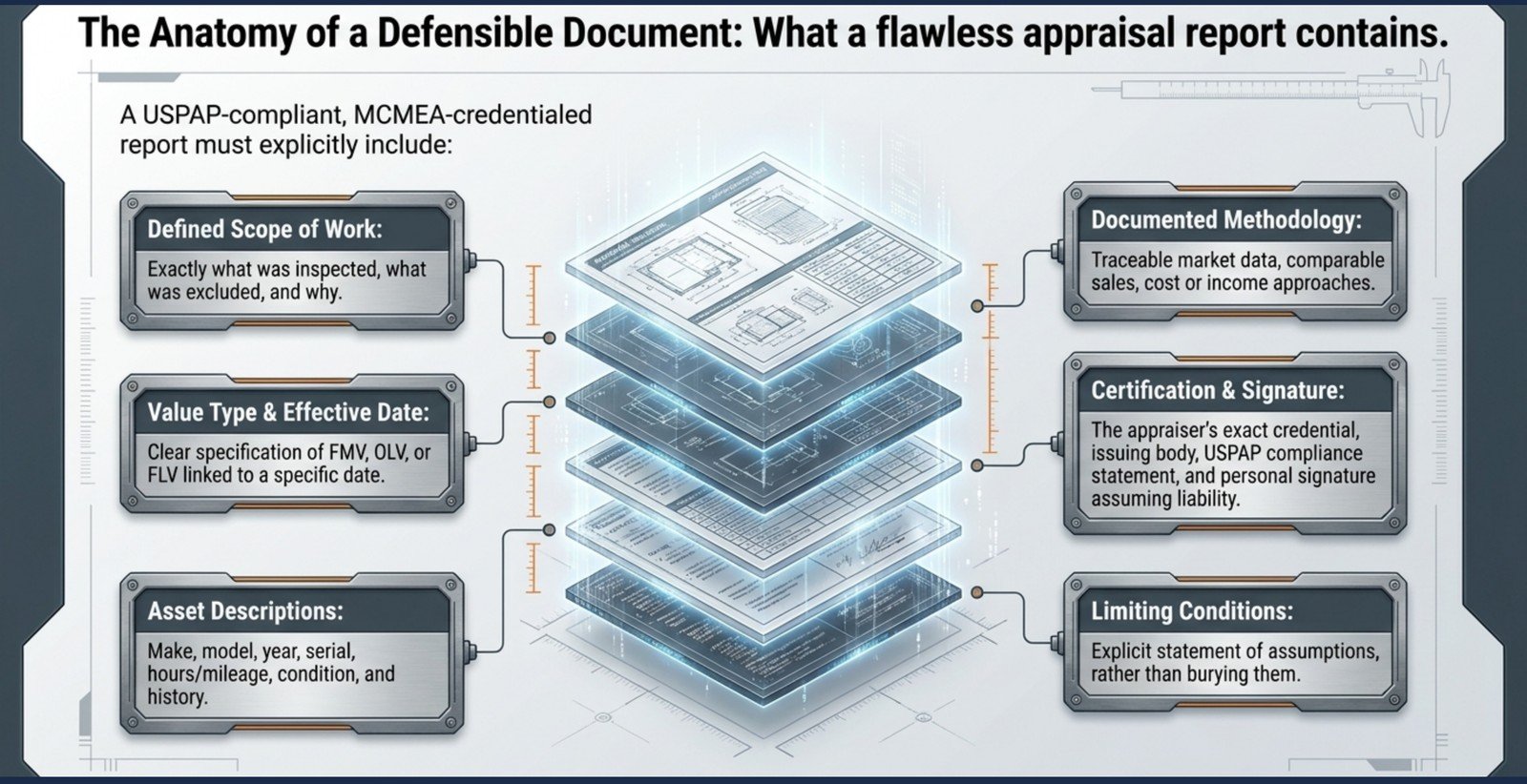
An ESOP equipment appraisal identifies and inspects the assets, states the value standard and effective date, shows the market evidence, and carries the appraiser's credential and signature.
Equipment is its own discipline inside the valuation.
Business valuation professionals value the enterprise and often rely on others for machinery values. When the equipment input comes from book values, the overall conclusion inherits that weakness. A credentialed M&E appraisal prices the assets against the market.
Nathan Bazzle is one of 26 Master Certified Machinery & Equipment Appraisers in the United States.
ESOP equipment appraisals, straight answers.
-
How often is it valued?
At least annually. ESOP-held stock that is not publicly traded must be valued by an independent appraiser each year, and in an equipment-heavy company the machinery is part of that value.
-
Who requires it?
The tax code (IRC section 401(a)(28)(C)) requires an independent appraiser, annual reporting drives the yearly valuation, and the Department of Labor enforces ERISA. The DOL has made ESOP valuations an enforcement focus.
-
Does it replace the business valuation?
No. It supports the equipment component of the overall ESOP valuation, which the business valuation professional develops.
-
What is adequate consideration?
For stock with no public market, ERISA defines it as fair market value determined in good faith by the trustee or named fiduciary. The plan cannot pay more than that for employer stock.
-
Why does DOL scrutiny matter?
Because unsupported asset values are the kind of weakness a regulator or a plaintiff presses. Credentialed equipment values strengthen that part of the file.
-
Is it certified appraisal work?
Yes. It is a USPAP-compliant, signed appraisal of the equipment supporting the annual valuation.
Put a supported equipment component under the annual number.
Fifteen minutes to scope it: the company, the equipment, and the valuation date. You get a credentialed M&E appraisal the trustee and the valuation firm can rely on.
USPAP-compliant · MCMEA-credentialed · One of 26 in the U.S.