
When an impairment indicator shows up, the equipment's fair value sets the size of the write-down.
Long-lived assets, equipment included, are tested for impairment when events suggest their carrying amount may not be recovered. If the asset group fails the test, the loss is measured against fair value. This guide covers what triggers an ASC 360 test, where fair value enters the measurement, and what an auditor expects behind the number.
Under ASC 360, long-lived equipment held and used is tested for impairment when indicators suggest the carrying amount may not be recoverable. Recoverability is tested against undiscounted cash flows. If it fails, the loss is the carrying amount minus fair value, measured under ASC 820. A credentialed equipment appraisal supplies a documented fair value the auditor can evaluate and test.
The write-down hits the income statement, and the fair value under it is where an auditor looks hardest.
A recoverability test, then a fair-value measurement.
ASC 360 requires testing long-lived assets for impairment when events or changes in circumstances indicate the carrying amount may not be recoverable: idled equipment, a drop in utilization, a decision to dispose of assets early, a sustained decline in the business. The first step compares the carrying amount to the undiscounted cash flows the asset group is expected to generate.
If the carrying amount fails that test, the loss is the amount by which carrying value exceeds fair value. For equipment, fair value depends on what the assets would sell for, which a depreciation schedule does not show.
Fair value, measured to the standard.
ASC 820 sets how that fair value is reached: the price the asset group would bring from a market participant on the measurement date. For idled or specialized equipment there is seldom a quoted price, so the measurement leans on sales of similar assets, cost data, and appraiser judgment, which usually means Level 3 inputs.
Auditors expect documented support for Level 3 measurements. An appraisal by a credentialed equipment appraiser gives the write-down a basis the auditor can test.
A fair-value measurement built for the audit.
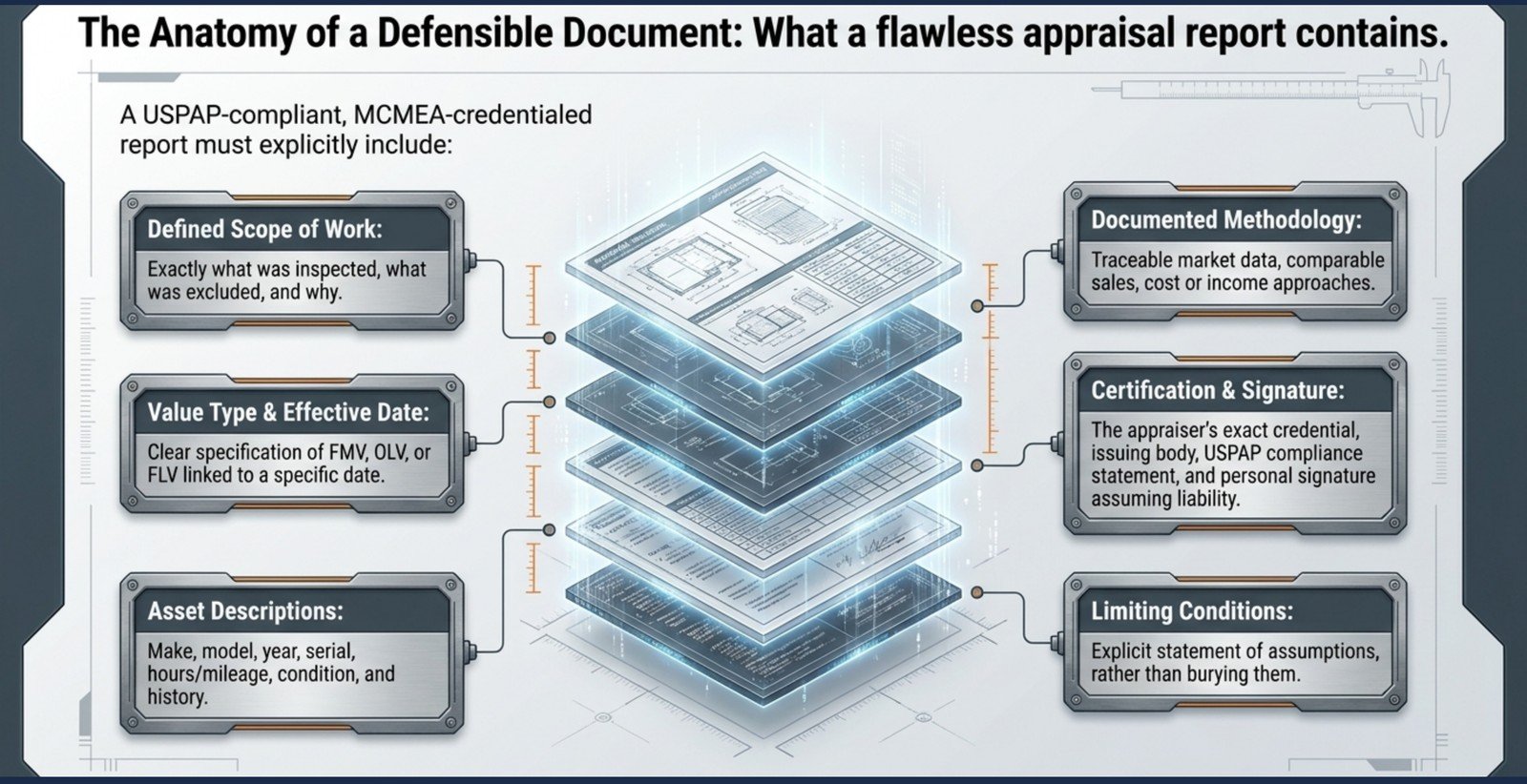
For an impairment, the appraisal walks the asset group the company is testing, ties each unit to the fixed-asset register, values it as of the date management measured the loss, and shows which sales and cost data support each conclusion.
Idle equipment still has a market.
Impairment indicators often arrive with idled lines or underused equipment, and that equipment still trades in a secondary market. Measuring its fair value means knowing that market and the approaches the standard recognizes. Net book value reflects neither.
Nathan Bazzle is one of 26 Master Certified Machinery & Equipment Appraisers in the United States.
ASC 360 impairment appraisals, straight answers.
-
What triggers the test?
An indicator that the carrying amount of a long-lived asset group may not be recoverable, such as idled equipment, a utilization drop, a planned early disposal, or a sustained business decline.
-
How is the loss measured?
After a recoverability step against undiscounted cash flows, the loss is the amount by which carrying value exceeds fair value.
-
How does ASC 820 relate?
ASC 820 governs how the fair value used in the measurement is determined: an exit price built from market evidence and classified in the fair-value hierarchy.
-
Why a third-party appraisal?
Because specialized equipment fair value is judgment-heavy and often sits in Level 3, where auditors expect documented, independent support.
-
What value standard?
Fair value, an exit price, measured consistent with ASC 820 and effective the measurement date.
-
Is this accounting advice?
No. Whether the asset group is impaired, and by how much, is management's conclusion, reviewed by the auditor. The appraisal gives them the fair value to measure it with.
Put supported fair value behind the write-down.
Fifteen minutes to scope it: the asset group, the indicator, and the measurement date. You get a credentialed fair-value appraisal measured to ASC 820 that the auditor can evaluate and test.
USPAP-compliant · MCMEA-credentialed · One of 26 in the U.S.