
Owners planning to step away usually find out what the equipment is worth from the buyer's lender. That's the wrong order.
Retirement and succession plans run on a price: what a son or daughter, a group of key employees, or an outside buyer pays for the business. In an equipment-heavy company the machinery carries a large part of that price, and whoever finances the successor will value it on their own terms. This guide covers why the equipment number belongs at the start of a succession plan, which values matter, and what an owner can still do once he knows it.
A succession plan needs the equipment's fair market value to set a price and its liquidation value to know what the successor can borrow against it. Owners who get both figures well ahead of the transfer have time to sell idle units, reconcile the asset schedule, and pick the structure that fits. Owners who wait hear the number for the first time from the successor's lender, with the deal already moving.
Book value is the figure on the depreciation schedule. It reflects tax write-offs, and it is rarely the number a buyer or a bank will use.
Every exit path prices the equipment.
A transfer to the next generation, a sale to key employees, an ESOP, or a sale to an outside buyer all start with a price. For an operation that runs on heavy equipment, the machinery is one of the largest components of that price and the one most often misjudged from inside the company.
Family transfers add a tax layer, since a sale below fair market value can carry a gift. Employee and outside buyers add a financing layer, since their lender will value the equipment as collateral.
Collateral value caps what the successor can borrow.
Many successors finance the purchase, and a bank underwrites the equipment as collateral, asking what it would fetch at auction or in a managed sell-off if payments stopped. That collateral figure is a liquidation value, and on specialized machinery it often runs well under fair market value.
When the owner knows both numbers early, the gap between them shows up in the plan instead of at closing. That is when seller financing, an earn-out, or a longer transition can still be built around it.
The number is most useful years before the sale.
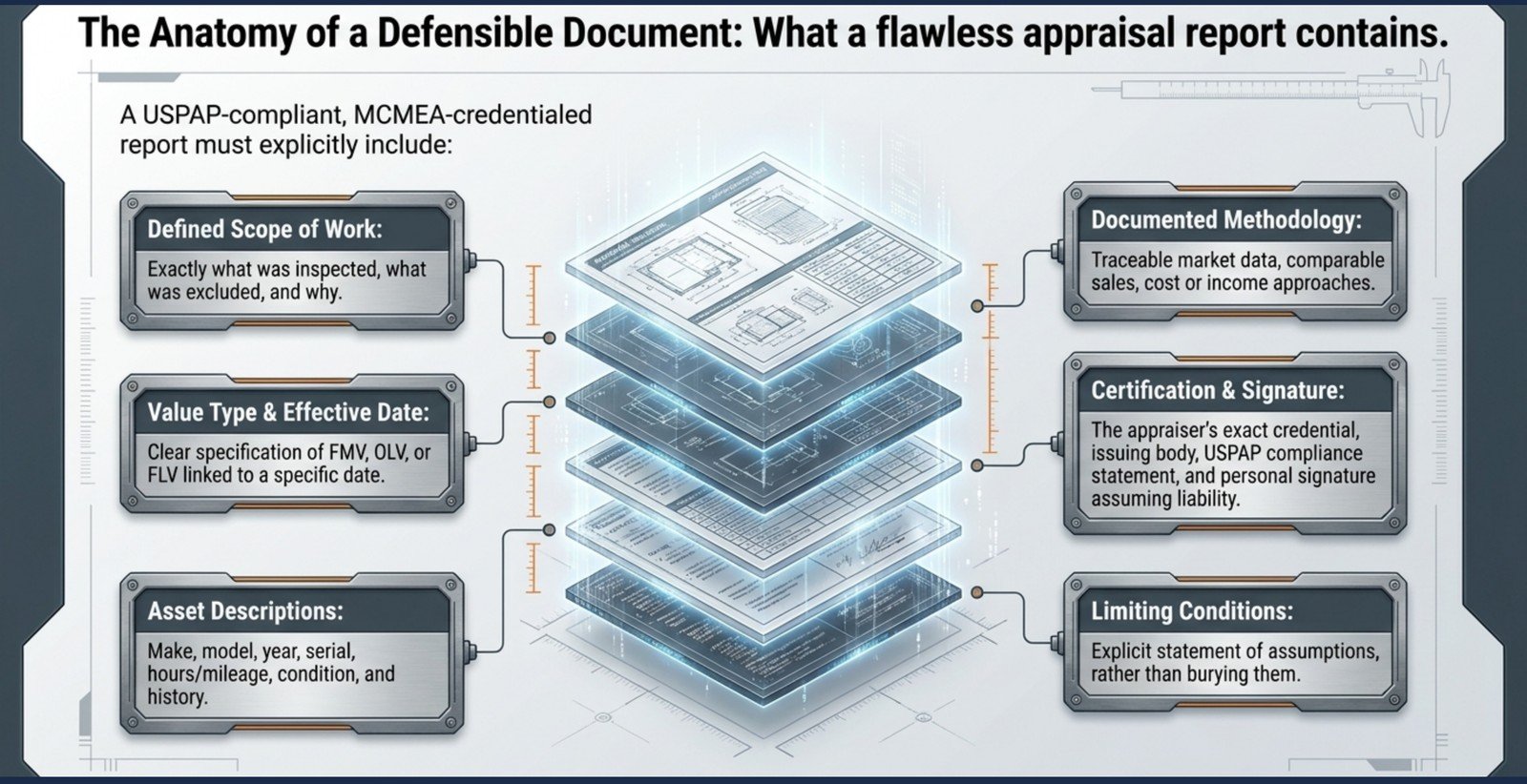
An early appraisal tells the owner which units carry value and which just carry cost. Idle equipment can be sold on the owner's schedule instead of the buyer's, and the asset schedule can be reconciled before a buyer's diligence team does it for him. The report documents scope, asset descriptions, value standards and effective date, market evidence, and the appraiser's credential and signature.
Updating the appraisal closer to the transfer is faster once the first one has built a clean schedule.
A number the successor and the lender will both accept.
A succession price has to hold when the buyer's advisors and lender review it. A credentialed appraisal gives the owner a market-based number to defend in that review, and gives the successor one to finance against.
Nathan Bazzle is one of 26 Master Certified Machinery & Equipment Appraisers in the United States.
Succession appraisals, straight answers.
-
When should an owner get the equipment appraised?
Well before the planned transfer, often two to three years out. That leaves time to sell idle units, reconcile the asset schedule, and choose a structure before a buyer is involved.
-
Which values does a succession plan need?
Fair market value to set the price, and orderly or forced liquidation value to understand what the successor's lender will lend against the equipment.
-
Does a family transfer need an appraisal?
Usually. A sale or gift to family is measured at fair market value, and a price below it can carry gift tax consequences. A supported value protects both generations.
-
Will the successor's lender accept our appraisal?
Lenders set their own requirements and some order their own appraisal. A credentialed, USPAP-compliant report built to the lender's value standards is the one most likely to be accepted or to shape theirs.
-
Can the appraisal help with idle equipment?
It shows which units carry value and what each is likely to bring in a sale. Whether to sell before the transfer stays the owner's decision.
-
Is this the same as a business valuation?
No. It values the machinery and equipment. A business valuation professional values the company and uses the equipment value in doing so.
Know the equipment number before the buyer does.
Fifteen minutes to scope it: the business, the equipment, the exit path, and the timeline. You get a credentialed appraisal you can plan the exit around, and one the successor can take to the bank.
USPAP-compliant · MCMEA-credentialed · One of 26 in the U.S.