
When a lender moves on its collateral, how the equipment sells decides the recovery.
After a default, the equipment stops being a working asset and becomes something to sell. A sale marketed over a reasonable period returns orderly liquidation value. A sale on a short clock returns forced liquidation value, usually less. This guide covers how the two premises differ, why the choice matters to the lender, the borrower, and any guarantor, and what an appraisal documents when the recovery may be argued in court.
In a foreclosure or repossession, recovery is framed by two premises: orderly liquidation value, a sale marketed over a reasonable period, and forced liquidation value, a compelled sale with little time. On specialized equipment the gap between them can be wide. A credentialed appraisal states which premise fits the planned disposition, can conclude both, and documents the basis for each.
The same machines can bring very different prices in a marketed sale over a few months and at an auction next week. Whoever ends up arguing about the deficiency will want that spread on paper.
The sale sets the recovery and the deficiency.
Once a secured loan defaults and the lender moves to foreclose or repossess, the recovery depends on how the collateral is sold. The lender is estimating what comes back. The borrower and any guarantor are measuring the deficiency that may follow.
A credentialed appraisal before the sale gives every party the same documented starting point.
The premise has to match the way the sale will run.
Under the Uniform Commercial Code, a secured party has to dispose of collateral in a commercially reasonable manner. Valuing a planned auction at orderly liquidation value, or a marketed sale at forced liquidation value, distorts the expected recovery from the start.
If a deficiency is contested or the sale is challenged, the appraisal becomes evidence. A signed report developed to a stated premise and effective date carries weight a dealer's phone estimate does not.
A recovery number built for the other side's review.
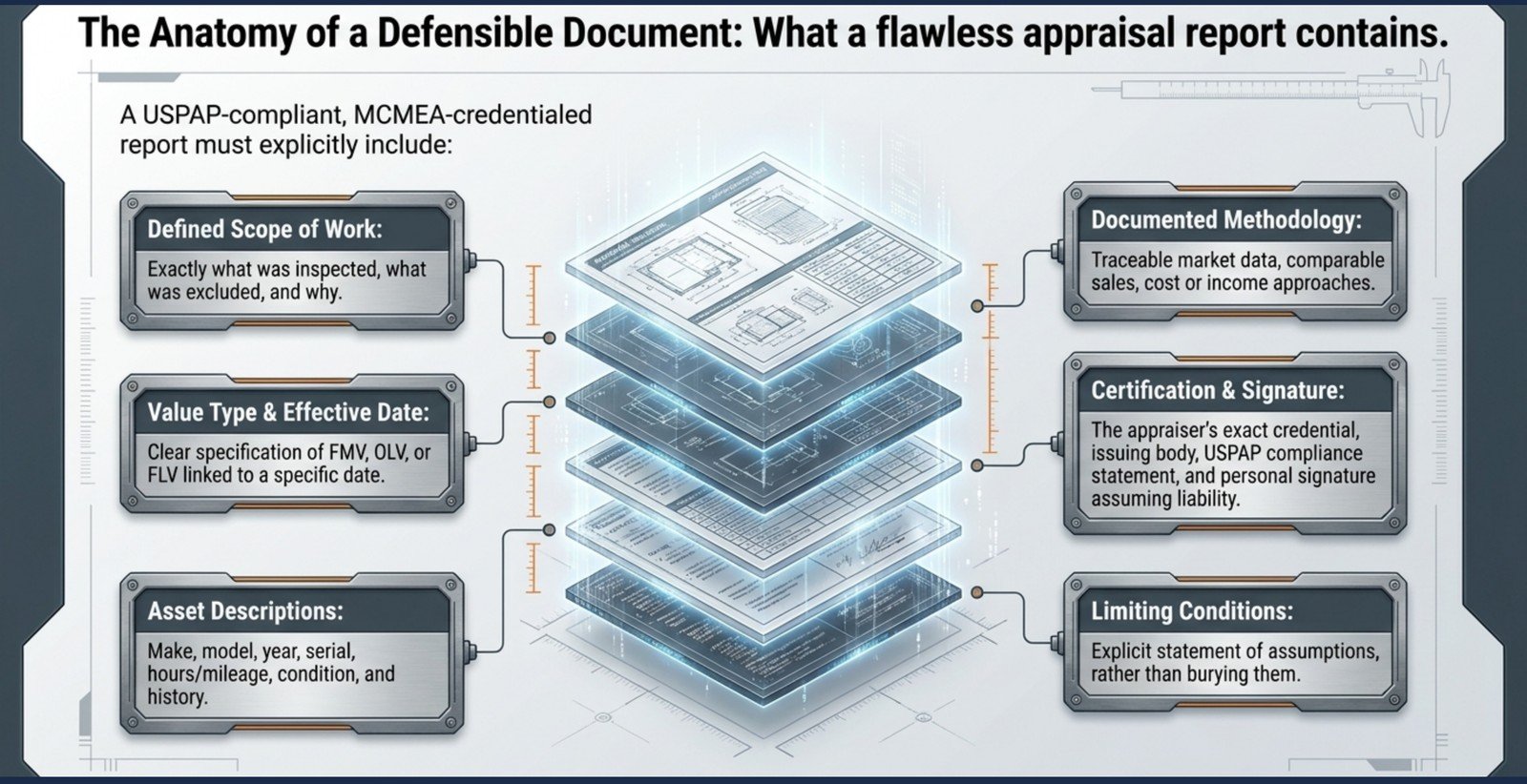
When a deficiency is on the table, opposing counsel reads the valuation looking for a weak point. The report identifies each asset and its condition, states the liquidation premise and effective date, shows the auction and dealer evidence, and carries the appraiser's credential and signature.
Forced-sale value is where guesses fall apart.
Estimating what equipment brings under compulsion means knowing who buys at auction, at what discount, and how a short timeline and poor condition compound each other. A haircut off book value has no footing once the sale is real.
Nathan Bazzle is one of 26 Master Certified Machinery & Equipment Appraisers in the United States. His valuation work has been tested under the Daubert standard.
Foreclosure and repossession appraisals, straight answers.
-
OLV versus FLV?
Orderly liquidation value assumes the assets are marketed over a reasonable period. Forced liquidation value assumes a compelled sale under time pressure, and it is usually lower.
-
Which value applies?
The one that matches how the disposition will run: its timeline, its sale channel, and the condition of the assets. The appraisal states the premise it used and why, and it can present both.
-
Can it be used in court?
It is built to be offered as evidence, and the appraiser can testify to it. Admissibility is the court's call.
-
Who orders it?
A lender, a receiver, or counsel for either side. The opinion is independent of whoever engages it.
-
How fast can it be done?
It is scoped to the disposition timeline. Tell us the date that governs and the engagement is built around it.
-
Is it the same as the loan-origination appraisal?
Often not. An origination appraisal usually assumes an orderly process. A foreclosure or repossession may call for forced liquidation value, depending on how the sale will run.
Document the recovery before the sale.
Fifteen minutes to scope it: the equipment, the disposition timeline, and whether a deficiency or a challenge is likely. You get a credentialed opinion stated to the liquidation premise that fits.
USPAP-compliant · MCMEA-credentialed · One of 26 in the U.S.