
Moving an equipment business into a trust fixes its value on the day of the transfer. The IRS can test that number.
Owners often move business interests or equipment into a trust years before an estate tax return would ever be filed: gifts to family trusts, grantor retained annuity trusts, or sales to a grantor trust in exchange for a note. Each transfer is valued as of its own date, and for an equipment business the machinery is a large part of that value. This guide covers why the transfer date matters, how adequate disclosure on a gift tax return works, and where a qualified equipment appraisal fits.
A gift to a trust is reported on Form 709 at fair market value as of the date of the gift. If the return adequately discloses the transfer, which a qualified appraisal can satisfy, the IRS generally has three years to challenge the value; without adequate disclosure, that period may never start. For a sale to a trust, a price below fair market value can turn part of the sale into a gift. Either way, the equipment number is where the plan holds or fails.
A trust plan built on a value nobody can support is a plan with an open question attached. The appraisal is what closes it.
Every transfer has its own date and its own value.
Planning around an equipment business usually means moving value out of the owner's hands while he is alive: gifting company interests to a trust, funding a GRAT, or selling interests to a grantor trust for a note. Each of those is measured at fair market value on the date it happens.
For a company that runs on heavy equipment, the machinery can be a large part of that value. The business valuation professional values the interests being transferred, and the equipment beneath them needs its own market-based number.
Adequate disclosure starts the three-year clock.
Treasury regulations set out what a gift tax return must disclose for the IRS limitations period on a gift's value to begin running. One way to meet that requirement is a qualified appraisal of the transferred property that meets the regulation's content requirements. When the gift is an interest in the business, that appraisal values the interest, and the equipment appraisal is one of its supporting inputs. When disclosure is adequate, the IRS generally has three years to question the value.
When it is not, the value can stay open to challenge indefinitely, including when the gift is accounted for at the owner's death. A supported equipment value protects the gift, and the same value supports the price in a sale to a trust.
Built to support the return.
An equipment appraisal supporting a gift or sale to a trust documents the scope of work, describes each asset, states fair market value as of the transfer date, shows the market evidence, and carries the appraiser's qualifications, credential, and signature.
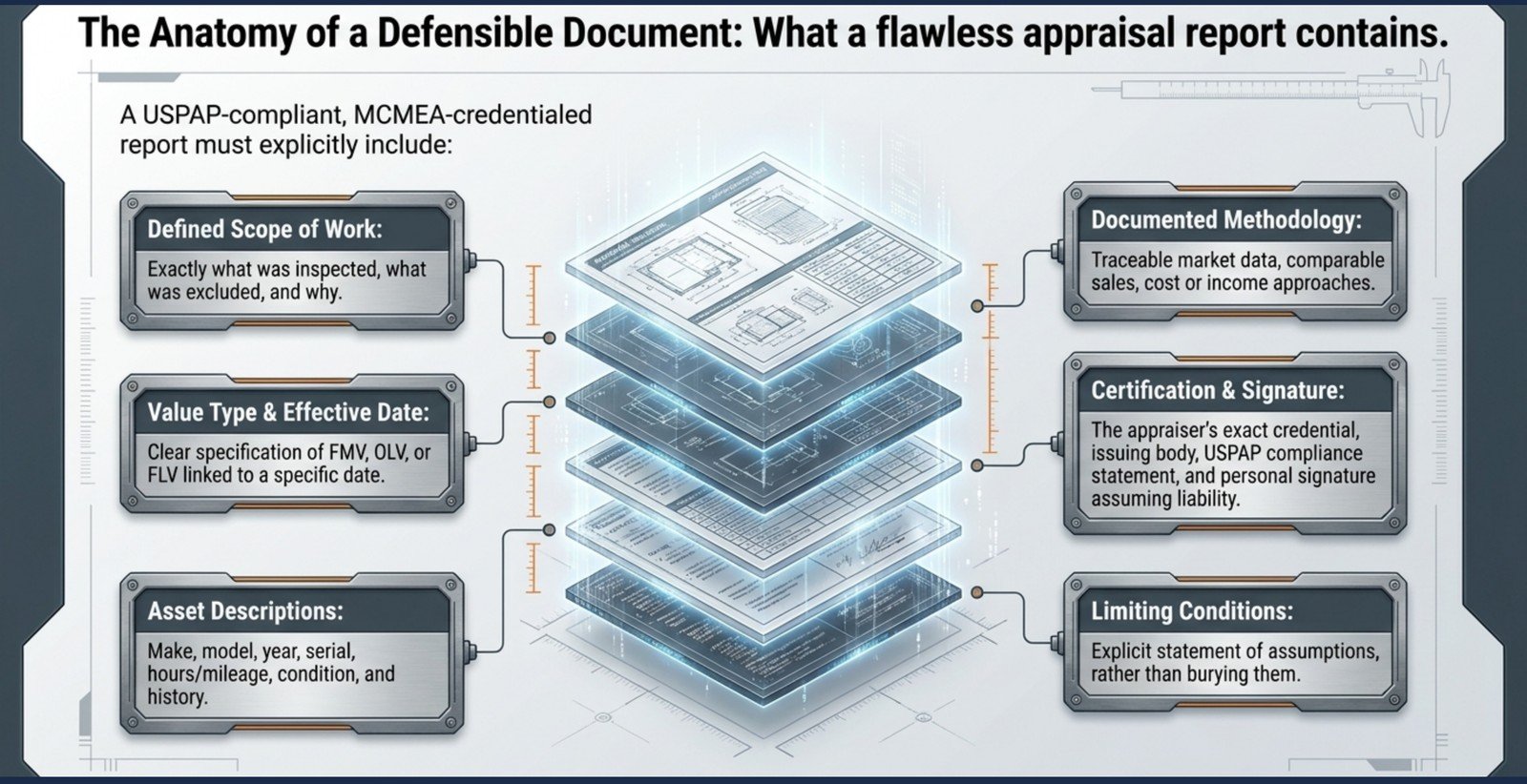
Planners who stage transfers over several years need a value for each date. A clean asset schedule from the first appraisal makes later updates faster and keeps the values consistent with each other.
Specialized equipment invites a second look.
A crushing plant, a set of CNC lines, or a spread of heavy construction equipment has no sticker price. When a gift tax return reports a value for assets like that, a reviewer will ask where it came from. A credentialed appraiser with class-specific experience answers that question in the report itself.
Nathan Bazzle is one of 26 Master Certified Machinery & Equipment Appraisers in the United States.
Trust planning appraisals, straight answers.
-
Why does a trust transfer need an appraisal?
Because the transfer is valued at fair market value on its date, and for an equipment business the machinery is a large part of that value. Gifts are reported on Form 709, and sales to a trust have to be priced at fair market value.
-
What is adequate disclosure?
Information on a gift tax return that, under Treasury regulations, starts the IRS limitations period on the gift's value. A qualified appraisal of the transferred property that meets the regulation's requirements is one way to satisfy it.
-
What happens without adequate disclosure?
The IRS limitations period on the gift's value may not begin, leaving the value open to challenge years later.
-
Is this the same as an estate tax appraisal?
The standard is the same, fair market value, but the date differs. A trust transfer is valued on the transfer date; an estate tax appraisal is valued at death or the alternate valuation date.
-
Does the equipment appraisal value the trust interest?
No. It values the machinery and equipment. The business valuation professional values the company interests, including any discounts, using that equipment value.
-
Is this tax advice?
No. Structure, discounts, and filing positions stay with the planner and tax counsel. The appraisal supplies a supportable equipment value.
Put a supported equipment value under the transfer.
Fifteen minutes to scope it: the business, the equipment, the transfer, and its date. You get a USPAP-compliant equipment appraisal that supports the valuation of the transferred interest, or that stands on its own when the equipment itself is the gift.
USPAP-compliant · MCMEA-credentialed · One of 26 in the U.S.