
In a shareholder dispute, the court decides fair value. The equipment is usually where the two sides are furthest apart.
Oppression claims, dissenters' rights after a merger, and deadlocked closely held companies often end with a court setting the value of a shareholder's stake. In an equipment-heavy company the machinery is a large share of that value, and each side's expert will have a view on it. This guide covers how statutory fair value differs from fair market value, where the equipment appraisal fits inside the business valuation, and what makes it hold under cross-examination.
Shareholder disputes are usually decided under a statutory or judicial standard called fair value, which in many states differs from fair market value, often on whether minority and marketability discounts apply. That is a legal question for counsel and the business valuation expert. The equipment underneath the valuation still has to be valued at market by someone qualified to value equipment, and that number is where a weak report gets taken apart.
The business valuator's model is only as solid as its inputs. If the equipment input is book value or a dealer's guess, opposing counsel doesn't need to attack the model.
A stake has to be priced, and neither side trusts the other's number.
A minority shareholder alleging oppression may seek a court-ordered buyout. A shareholder who dissents from a merger or sale may have statutory appraisal rights. A deadlocked company may face judicial dissolution, and in many states the other owners can elect to buy the petitioner out instead. Each path ends with someone putting a price on the shares.
In an equipment-intensive company the machinery drives much of that price, and the controlling and minority sides have opposite interests in it. An equipment appraisal independent of both sides is what a court can rely on.
Different standards, same equipment.
Fair market value is the price between a willing buyer and a willing seller. Statutory fair value, as many state courts apply it, is the shareholder's proportionate share of the whole company, often without the minority or marketability discounts a market transaction would carry. Which standard applies, and how, is set by the statute, the case law, and counsel.
Those adjustments happen at the business level. The equipment itself is still valued at what the market would pay for it in use, as of the valuation date the court applies, and that value has to be right before any adjustment means anything.
An input that survives the other side's expert.
In litigation the equipment appraisal is an exhibit, and the opposing expert will read it line by line. It holds when it documents scope, asset descriptions, value standard and effective date, market evidence, and the appraiser's credential and signature, with limiting conditions stated rather than buried.
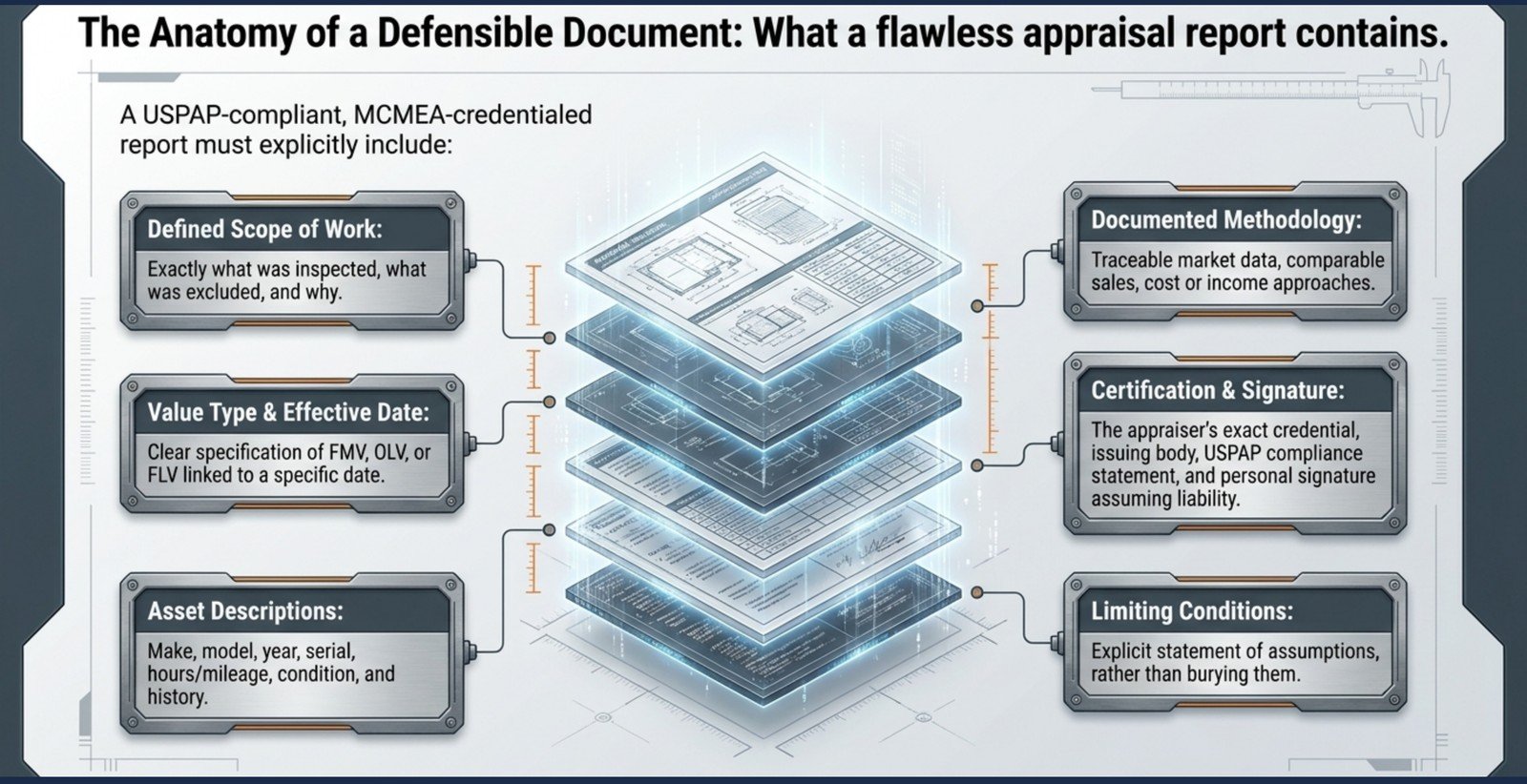
The appraiser may also have to testify to the opinion and rebut the other side's equipment values. A report written with that in mind reads differently from one written for a lender's file.
The equipment is the business valuator's exposed flank.
Business valuation experts often rely on someone else for the machinery values. When they rely on book values or a quick outside estimate, opposing counsel has an easy target that doesn't require attacking the valuation model at all. A credentialed M&E appraisal closes that gap and lets the business valuation stand on its own inputs.
Nathan Bazzle is one of 26 Master Certified Machinery & Equipment Appraisers in the United States. His valuation work has been tested under the Daubert standard.
Shareholder dispute appraisals, straight answers.
-
What is fair value in a shareholder case?
A standard set by state statute and case law for valuing a shareholder's interest, often the proportionate share of the whole company without minority or marketability discounts. Counsel and the business valuation expert determine how it applies.
-
Does the equipment appraisal decide fair value?
No. It supplies the market value of the machinery and equipment, which the business valuation expert uses in reaching the fair value of the shares.
-
What date is the equipment valued as of?
The valuation date the statute or court applies, which varies by jurisdiction and claim. The appraisal values the equipment as of that date and states it.
-
Who retains the equipment appraiser?
Usually counsel for one side, sometimes both sides jointly, and sometimes the court. The opinion has to be independent and reflect the market regardless of who retained it.
-
Will the appraiser testify?
If the matter reaches a hearing or trial, the appraiser may testify to the opinion and rebut opposing equipment values.
-
Is this legal advice?
No. Questions of standard, discounts, and procedure stay with counsel. The appraisal supplies a defensible equipment value.
Don't let the equipment be the soft spot in the valuation.
Fifteen minutes to scope it: the company, the equipment, the valuation date, and where the case stands. You get a credentialed equipment appraisal built to be tested.
USPAP-compliant · MCMEA-credentialed · One of 26 in the U.S.