
When a partnership winds up, the equipment's value depends on how it leaves the business.
Dissolution ends the partnership as a going concern. The equipment then gets sold, divided between the partners where the agreement or a court allows it, or taken over by one partner, and each of those paths calls for a different premise of value. This guide covers how the premise is chosen, why dividing equipment in kind needs per-asset values, and what makes the number hold if the dissolution ends up in court.
In a dissolution the first question is the premise of value: continued use if one partner keeps operating, orderly or forced liquidation if the assets are being sold off. The wrong premise moves the number more than any other judgment in the appraisal. A credentialed appraisal states the premise, values each asset under it, and gives the partners or the court a schedule they can divide.
The same excavator can carry three defensible values depending on whether it keeps working, goes to an orderly sale, or crosses the auction block next month. Partners who skip that question usually end up arguing about it later, with lawyers in the room.
The partnership's last job is dividing what it owns.
Winding up requires the partnership to settle its obligations and distribute what remains. Partnership statutes and most partnership agreements set out how that happens, and in an equipment business the machinery is often the largest thing left to distribute.
Whether the equipment is sold and the cash split, or the partners take assets in kind where the agreement or a court permits it, someone has to put a value on each piece. When the partners are already parting ways, that number can't come from either of them.
Continued use, orderly sale, or forced sale.
If one partner will keep running the operation with the equipment, fair market value in continued use usually fits. If the assets are being sold to wind up the business, orderly liquidation value reflects a sale with reasonable time to find buyers, and forced liquidation value reflects a sale on a short clock, typically at auction.
The agreement, the court, or counsel sets which premise governs. The appraisal's job is to apply it consistently, state which premise was used, and where useful conclude more than one, so the partners can see what each path is worth before choosing it.
A schedule, not a lump sum.
When partners split equipment instead of selling it, a single total is not enough. Each asset needs its own value so the shares can be balanced, and the report has to document scope, asset descriptions, premise and effective date, market evidence, and the appraiser's credential and signature.
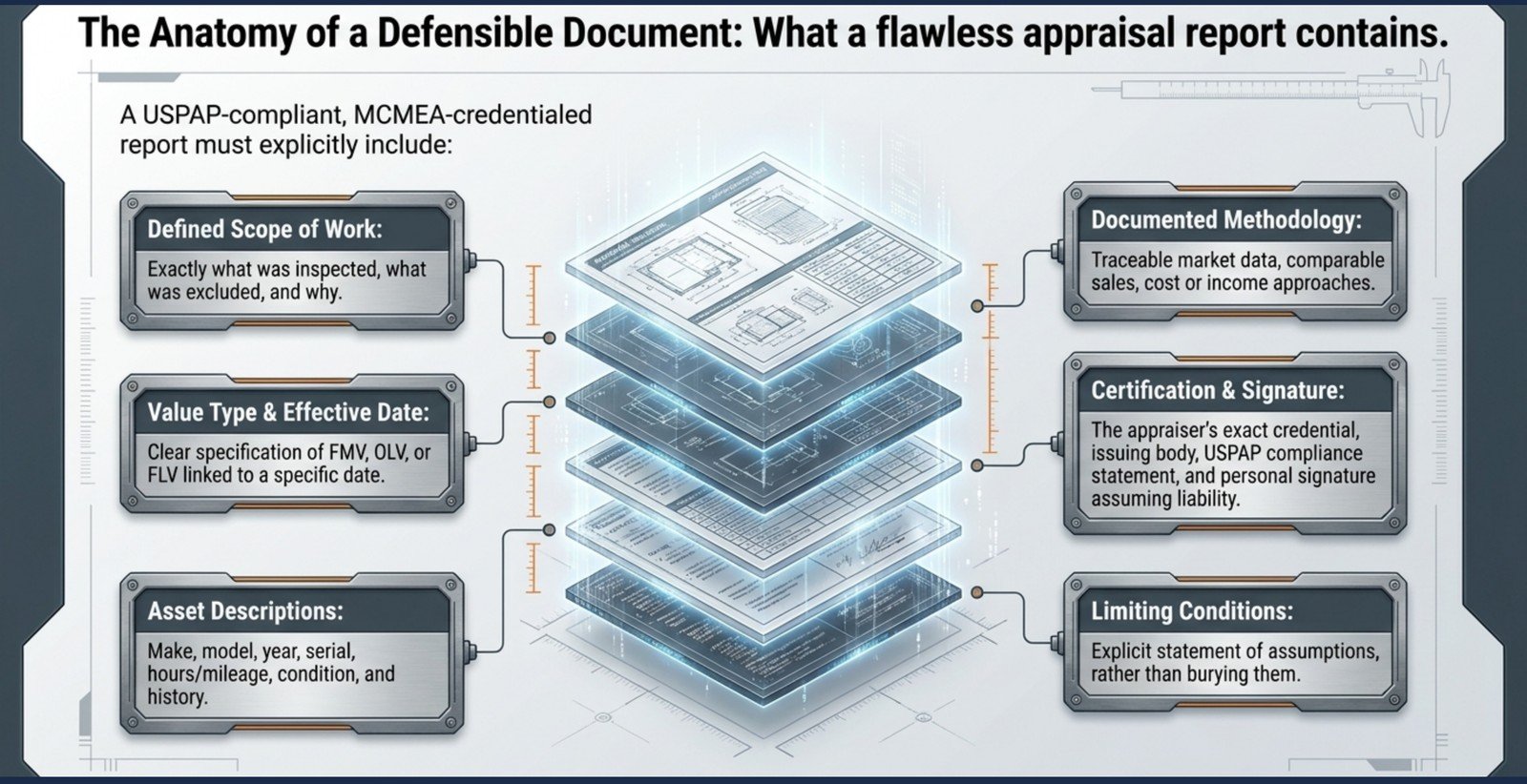
Per-asset values also show where a division is lopsided. Two partners can each take half the units and walk away with very different halves of the value.
Dissolutions that go to court go to experts.
When partners cannot agree, a court may supervise the winding up and each side may bring its own valuation. An appraisal built from the start to be tested, with a stated premise and documented market support, holds up in that setting. A number assembled from dealer quotes and depreciation schedules usually doesn't.
Nathan Bazzle is one of 26 Master Certified Machinery & Equipment Appraisers in the United States. His valuation work has been tested under the Daubert standard.
Partnership dissolution appraisals, straight answers.
-
Which value applies in a dissolution?
It depends on what happens to the equipment. Continued use usually fits when one partner keeps operating it; orderly or forced liquidation value fits when the assets are sold to wind up. The agreement, the court, or counsel decides which governs.
-
Can the appraisal show more than one value?
Yes. Concluding continued-use and liquidation values side by side lets the partners compare one partner keeping the operation against selling everything before they pick a path.
-
Why value each asset separately?
Because dividing equipment in kind means balancing shares piece by piece. A lump-sum value can't tell the partners whether each side's half is actually half.
-
What effective date is used?
The date the agreement, statute, or court specifies, often the dissolution date or a date near distribution. The appraisal values the equipment as of that date and says so.
-
What if the partners can't agree on an appraiser?
Each may retain one, or the court may appoint one. A credentialed, independent opinion with documented support is the one most likely to be relied on either way.
-
Is this different from a partner buyout?
Yes. A buyout keeps the business running with fewer owners. A dissolution ends it or splits it, which is why the premise of value becomes the central question.
Settle the premise before the equipment is divided.
Fifteen minutes to scope it: the equipment, how it will leave the partnership, the governing agreement, and the effective date. You get a credentialed, per-asset appraisal the partners or the court can divide from.
USPAP-compliant · MCMEA-credentialed · One of 26 in the U.S.