
Buying out a partner takes two equipment numbers, and the lender only cares about one of them.
When a partner buyout happens outside a buy-sell agreement and the buyer borrows to fund it, the equipment gets valued twice: once to set the price the departing partner receives, and once to set what the lender will advance against it. This guide covers why those two numbers differ, which value standard drives each, and how one credentialed appraisal can serve both.
In a partner buyout, the equipment sets the price at fair market value in continued use, and the buyout lender sizes the loan on orderly liquidation value. The gap between the two is cash the buying partner has to find somewhere else. An appraisal that concludes both values from one inspection and one effective date shows that gap before the price is agreed, not after the term sheet arrives.
Partners who agree on a price first and call the bank second often learn the loan covers less of it than they assumed. The equipment didn't change. The value standard did.
A negotiated price with no referee.
When a partner exits outside a buy-sell agreement, or the agreement is silent on how value is set, the price is whatever the two sides negotiate. In an equipment-heavy company the machinery is often the largest piece of that price, and the departing partner and the buyer each have an obvious reason to see it differently.
Book value settles nothing here. It reflects depreciation elections made for tax, and a partner who has watched used-equipment prices move will not accept it as the price of his share. An independent appraisal puts a market number on the table that neither side wrote.
Fair market value sets the price. Liquidation value sets the loan.
Fair market value assumes a willing buyer and seller with the equipment staying in use. That is the right standard for what the departing partner's share is worth. A lender financing the buyout asks a different question: what the equipment brings if the loan fails and the assets have to be sold. That is orderly liquidation value, and sometimes forced liquidation value.
On specialized equipment, liquidation value can sit well below fair market value. When the appraisal concludes both, the buying partner knows how much of the price the equipment will carry and how much has to come from cash, seller financing, or other collateral, while there is still time to adjust the deal.
One inspection, both value standards, one date.
A buyout appraisal that holds states the scope, describes each asset, names each value standard and the effective date, shows the market evidence, and carries the appraiser's credential and signature. Built that way, the departing partner can rely on it for the price and the lender can rely on it for the collateral.
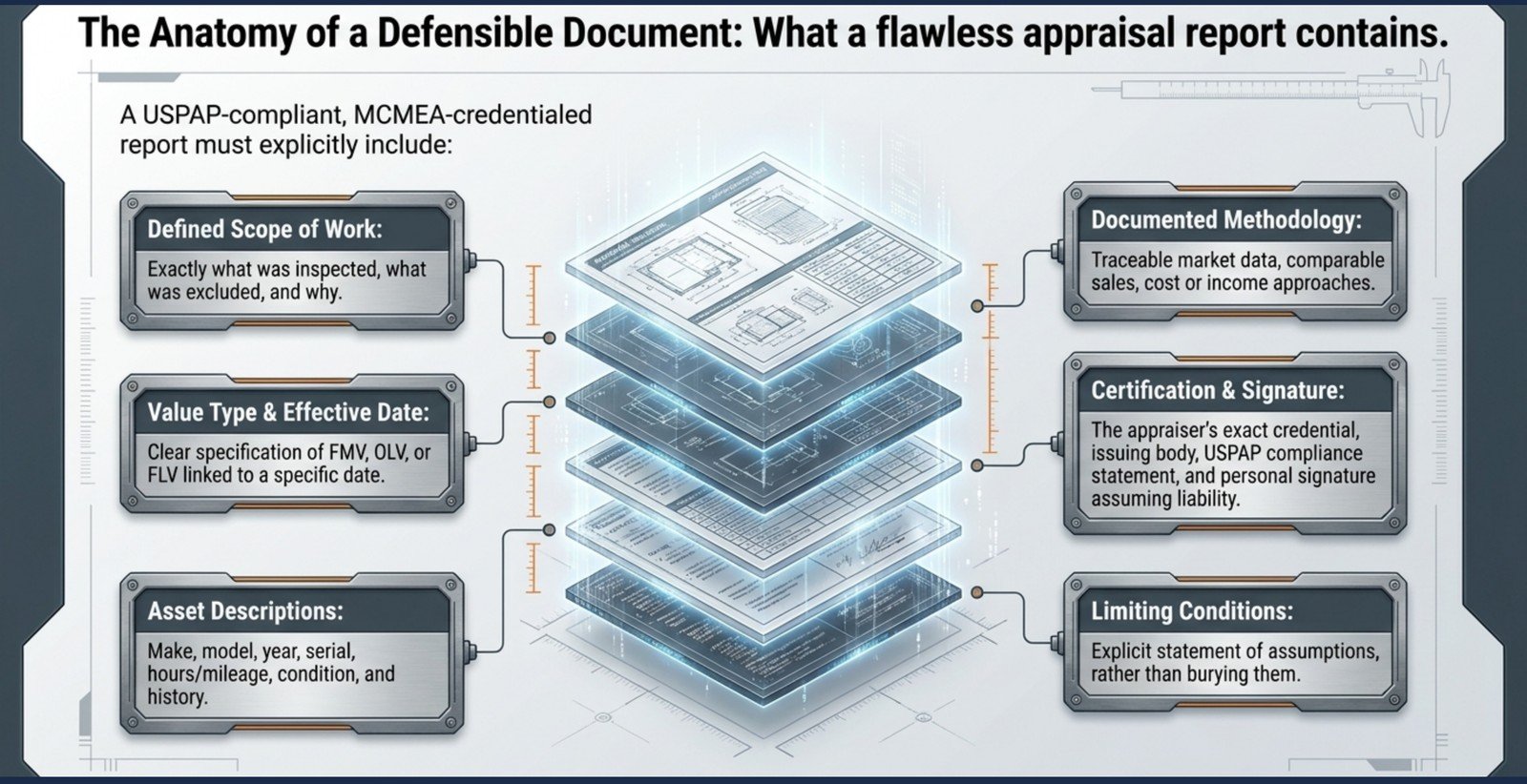
Using the lender's appraisal for both purposes is a common shortcut. That report is written for the bank's credit file, usually at liquidation value, and it was never meant to set a fair price between partners.
The partner who leaves should not leave with the argument.
A departing partner who believes he was underpaid tends to come back through counsel. A price built on a credentialed, documented equipment value gives the remaining owner something to point to if the price is questioned later, and gives the departing partner a reason to accept it now.
Nathan Bazzle is one of 26 Master Certified Machinery & Equipment Appraisers in the United States.
Partner buyout appraisals, straight answers.
-
Do we need an appraisal if we already agreed on a price?
If the buyout is financed, usually yes. The lender will want its own collateral value, and if that value comes in low the agreed price may not be financeable. Knowing both numbers before signing avoids renegotiating after.
-
Which value standard sets the buyout price?
Usually fair market value in continued use, unless the partnership or operating agreement prescribes another standard or method. Where an agreement exists, the appraisal follows it.
-
Why would the lender's number be lower?
Lenders size loans on what the equipment would bring in a sale if the loan failed, which is orderly or forced liquidation value. On specialized equipment that can be well below fair market value.
-
Can one appraisal serve the partners and the lender?
Often, yes, if it concludes each required value standard and meets the lender's requirements. Confirming those requirements before the engagement starts is part of scoping it.
-
How is this different from a buy-sell appraisal?
A buy-sell appraisal follows a value standard and trigger written into an existing agreement. A negotiated buyout often has neither, and the financing adds a second value standard to the same engagement.
-
Who usually orders it?
Either partner, the company, or both jointly. Independence matters more than who signs the engagement letter; the report has to reflect the market rather than either side's position.
Know both numbers before the price is signed.
Fifteen minutes to scope it: the business, the equipment, the agreement if there is one, and the lender's requirements. You get one credentialed appraisal that sets the price and supports the financing.
USPAP-compliant · MCMEA-credentialed · One of 26 in the U.S.