
When a buy-sell triggers, the equipment value decides what the buyout costs.
Closely-held equipment businesses are often built around a buy-sell agreement — the contract that governs what happens when an owner dies, retires, is disabled, or exits. When it triggers, the machinery and equipment on the books is usually the single largest driver of the buyout price, and the departing and remaining owners are on opposite sides of that number. This guide covers why these events need an independent appraisal, what value standard applies, and how a credentialed number keeps the transition from becoming a dispute.
When a buy-sell agreement triggers — an owner dies, departs, or is bought out — the equipment on the books is usually the biggest component of the buyout price, and the co-owners have directly opposing interests in it. An internal book value can't settle that. A credentialed, independent appraisal at the agreement's value standard is what turns the equipment number from a fight into a number both sides can accept.
The point of a buy-sell is to make ownership transitions orderly. That only works if the number underneath it is independent and defensible — because the moment real money is at stake, the departing owner wants it high and the remaining owners want it low, and book value satisfies neither.
Two co-owners, one number, opposite incentives.
A buy-sell triggering event — death, disability, retirement, withdrawal, or a forced buyout in a dispute — requires the business to be valued so the departing interest can be purchased. For an equipment-intensive company, the machinery and equipment is the heart of that value, and getting it wrong distorts the entire buyout.
The two sides are structurally opposed: the departing owner (or the estate) benefits from a high value, the remaining owners from a low one. An internal book number — depreciated for tax, not marked to market — won't survive that tension. The agreement needs a credentialed, independent appraisal that reflects the market, not either side's preference.
Fair market value — or whatever the agreement specifies.
Most buy-sell work concludes fair market value — the price a willing buyer and willing seller would agree on, neither compelled. But the agreement itself may prescribe a standard, a method, or an effective date, and a well-run appraisal follows the contract. Reading the buy-sell before the engagement begins is part of doing it right.
Independence is the whole point. Whether the parties agree on a single appraiser or each retains one, the value of a credentialed opinion is that it reflects the market and a documented methodology rather than an advocacy position — which is exactly what lets both sides, and the agreement, rely on it.
A defensible number both sides can live with.
When money is changing hands between co-owners, the losing side of the number looks for the seam. A report that holds documents its scope, the asset descriptions, the value standard and effective date, a traceable methodology, and the appraiser's credential and signature — so there's little to argue with and a clean basis for the buyout.
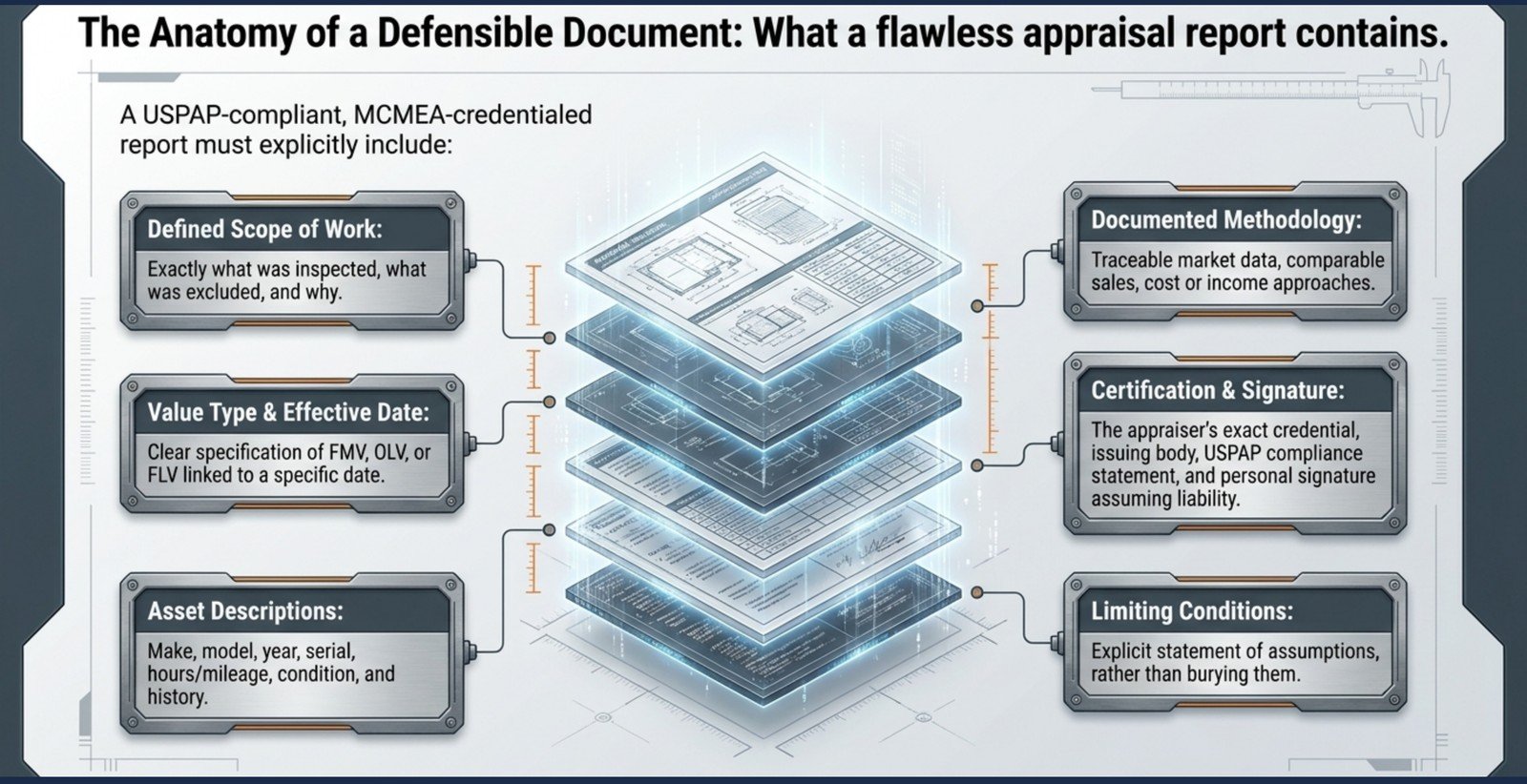
Done proactively, this is even better: many companies commission a periodic appraisal to keep the buy-sell value current, so that when a triggering event arrives the number is already established and the transition is genuinely orderly rather than a scramble under pressure.
The equipment is the contested piece — value it right.
In an equipment business, the machinery is where the valuation gap between the two sides is widest and hardest to resolve. A generalist's number invites the other side to challenge it; a credentialed appraiser with class-specific experience produces one that holds.
There are 26 Master Certified Machinery & Equipment Appraisers in the United States. When a buyout price rests on the equipment value, that credential is what keeps the number — and the transition — from unraveling into a dispute.
Buy-sell equipment appraisals — straight answers.
-
Why does a buy-sell need an appraisal?
When the agreement triggers, the business has to be valued to buy out the departing interest, and in an equipment-intensive company the machinery is the largest driver of that value. The co-owners have opposing interests in the number, so it needs a credentialed, independent appraisal rather than an internal book figure.
-
What value standard applies?
Usually fair market value — willing buyer, willing seller, no compulsion — but the buy-sell agreement itself may prescribe a specific standard, method, or effective date. A well-run appraisal follows what the contract requires.
-
Before or after the triggering event?
Both work, but proactive is better. Many companies commission a periodic appraisal to keep the buy-sell value current, so when death, departure, or a dispute occurs the number is already established and the transition is orderly instead of a pressured scramble.
-
Can one appraiser serve both sides?
Often, yes — the parties may agree on a single independent appraiser to avoid duelling numbers, or each may retain one. Either way, the value of a credentialed appraiser is independence: a market-based opinion both sides and the agreement can rely on.
-
How is it different from M&A or estate?
The value discipline is shared, but the trigger and standard differ. A buy-sell values a departing owner's interest under the agreement's terms; M&A prices a whole transaction; an estate appraisal supports a tax filing or heir division. Each has its own effective date and purpose.
-
What if the owners disagree on value?
That's the normal condition, and it's exactly what a credentialed, independent appraisal is for. A documented, defensible number developed to the agreement's standard gives both sides a basis to settle on rather than a figure to fight over.
Settle the equipment number before it becomes the fight.
Fifteen minutes to scope it — the business, the equipment, the agreement's value standard, and the triggering event or your timeline. You get a credentialed, independent appraisal both sides can rely on.
USPAP-compliant · MCMEA-credentialed · One of 26 in the U.S.