
Chemical plant equipment appraisal — where the metal, not the age, decides the number.
Process equipment hides its value in details a generalist walks right past: the alloy a reactor is built from, the service it actually saw, and what it will truly cost to purge and pull it out if the unit ever comes down. This is field-verified, USPAP-compliant appraisal built for operations that run glass-lined and alloy reactors, distillation columns, heat-exchanger banks, and continuous process trains — a number that survives a lender, an insurer, or an opposing expert reading it line by line.
Two reactors can sit side by side, the same size and the same age, and be five times apart on the schedule — because one is glass-lined carbon steel and the other is Hastelloy C-276. Read the metallurgy and the service history right and you have a defensible value. Read them off a depreciation table and you have a number that either overstates collateral a lender will later reject, or understates iron you're leaving on the table.
BAZZLE appraises chemical manufacturing and process equipment nationwide — specialty and fine chemicals, coatings and adhesives, agrochemicals, polymers and intermediates, and toll and custom processors — on site, by desktop review, or remotely. The credential behind the number is the MCMEA, held by 26 appraisers in the United States, and it's carried by the field time it takes to tell an intact glass lining from one that's been chipped and re-glassed, and an alloy vessel from the carbon-steel one painted to match.
The alloy and the service history — long before the year of manufacture.
A bank of general-purpose stainless tanks trades in a liquid resale market with comparables close at hand. A glass-lined reaction train, a graphite-block exchanger, or a titanium column does not — its worth turns on two things no table can report: what the vessel is built from, and what it was built to withstand. Misread the alloy, or misjudge the corrosion it actually took, and the figure comes apart the moment a lender's reviewer or an opposing expert sets a service record and a metal test against it.
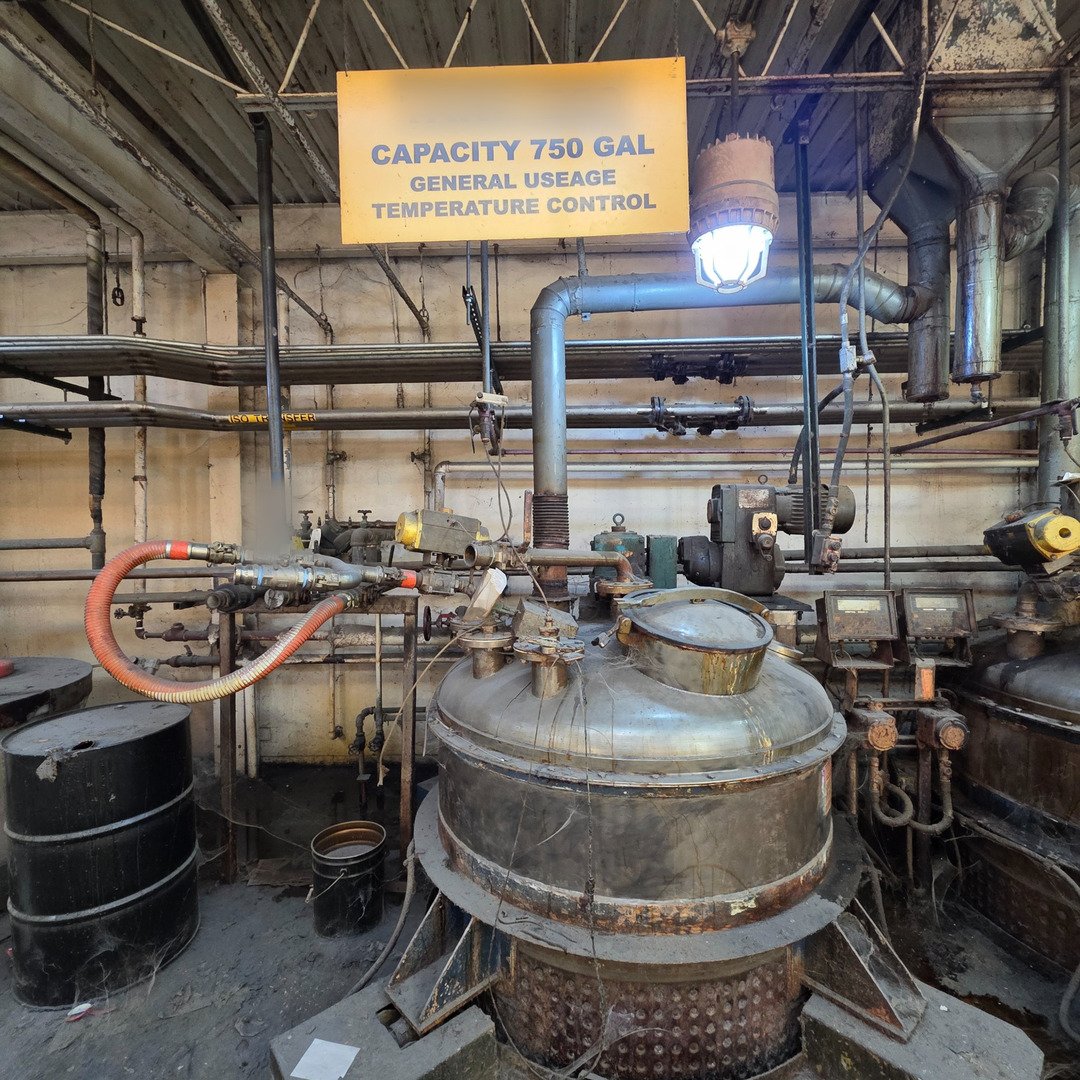
And here is the cost that rarely reaches the schedule: the fastest quotes on your reactors come from the process-equipment dealers and relocators who also buy, move, and resell them — and from scrap buyers who price the whole unit as bare metal. Each of those is a removed-and-hauled figure by design. Not one subtracts what it truly takes to purge, neutralize, decontaminate, permit, and dismantle a hazardous unit safely — an expense that can pull a forced-liquidation figure toward zero. Left unchallenged, a quote like that sets the anchor for your sale, your claim, or the collateral your lender books.
From the reactor train to the tank farm — and the systems that keep it safe.
-
Reaction & separation
Glass-lined, stainless, Hastelloy, and exotic-alloy reactors, plus graphite; distillation and fractionation columns, evaporators, crystallizers, dryers, centrifuges, Nutsche and plate-and-frame filters, extractors, and scrubbers — the engineered core where the alloy sets the value.
-
Storage, transfer & utilities
Atmospheric, pressure, and cryogenic tanks; shell-and-tube, plate, and graphite-block heat exchangers; centrifugal, metering, mag-drive, and canned pumps; compressors, agitators, boilers, cooling towers, chillers, and nitrogen systems.
-
Control, safety & environmental
DCS and PLC control systems, instrumentation and analyzers, flare and vapor-recovery units, thermal and catalytic oxidizers, wastewater and scrubber trains, relief and blowdown systems, and MCC and electrical distribution.
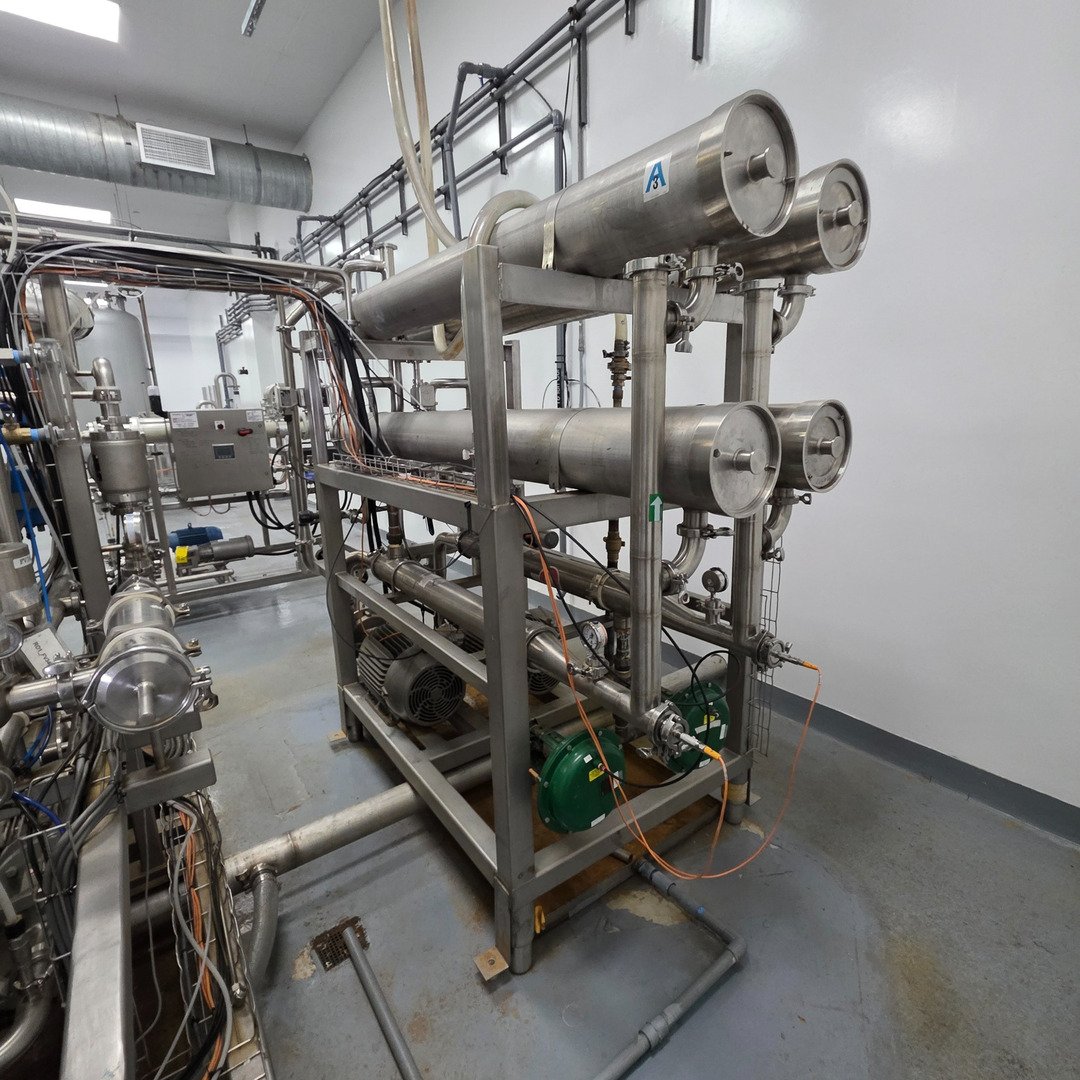
Where a soft number gets found out.
Chemical operators commission appraisals at a handful of predictable moments, and in each one a figure gets set by somebody — the only question is whether you set it first: selling or acquiring a plant or a single unit, where the iron carries much of the deal; equipment-secured and asset-based financing, which won't fund without a USPAP report; insurance schedules of replacement cost and the claims that follow a loss, business interruption included; property-tax appeals; idle-asset, mothball, and decommissioning calls, where removal cost is the whole game; and bankruptcy, workouts, buyouts, estate, and tax. Every one of them locks in a value type — and a premise — the appraisal is then held to.
Which standard governs — Fair Market Value, Orderly Liquidation Value, or Forced Liquidation Value — follows the purpose rather than a preference, and on alloy-heavy units the distance between them runs wide. Unsure which your situation calls for? Begin with the value-type breakdown; if the trigger is already clear, the guide written for it takes you straight there.
Chemical plant appraisals — straight answers.
-
Do process units really need a specialist?
They do. On a chemical unit the value rides on materials of construction and service history, not year built. Two reactors that look alike can be worlds apart — one glass-lined carbon steel, one Hastelloy C-276 — and a young vessel that ran chloride or acid service can trail an older one that ran clean. Price it off a depreciation table and the number falls the moment someone qualified reads it.
-
Which assets do you cover?
Reaction and separation — glass-lined, stainless, Hastelloy, and exotic-alloy reactors, columns, evaporators, crystallizers, dryers, centrifuges, filters, and scrubbers. Storage, transfer, and utilities — pressure and cryogenic tanks, heat exchangers, pumps, compressors, agitators, boilers, and cooling systems. And control, safety, and environmental — DCS and PLC systems, flare and vapor recovery, oxidizers, and wastewater trains.
-
Why does the alloy matter so much?
Because materials of construction carry most of the cost and most of the resale value in process equipment. An exotic-alloy or glass-lined vessel can be worth many times its carbon-steel twin, and alloy holds an intrinsic metal value carbon steel never does. Read the metallurgy — or the service — wrong and every number after it rests on the wrong footing.
-
How does removal cost change the liquidation number?
On a hazardous unit, forced-liquidation value isn't the metal — it's the metal minus the cost to purge, neutralize, decontaminate, permit, and dismantle it safely. Residual product can pull net realizable value toward zero, sometimes below it. A scrap or relocation quote ignores that; a credentialed appraisal nets it, which is often the line between real collateral and collateral that isn't there.
-
Which standard will a lender or buyer want?
It follows the purpose. Deals and acquisitions tend to run on Fair Market Value; a lender securing against the iron leans on Orderly Liquidation Value and treats Forced Liquidation Value as the bottom; an insurer works from replacement cost. On alloy-heavy units that range is wide to begin with, and opens further once removal cost comes off the top — which is why sector experience decides whether any of the figures hold.
-
Can you value an idle or mothballed unit?
Yes, and that's where guesswork costs the most. A running train carries value as a system; shut down and broken up, each vessel drops back to what its alloy and condition will bring, less removal. Valuing an idle unit means judging what actually transacts, in what form, and at what net — not what the original build cost implies.
Get the number before the metallurgy and the cleanup cost surprise someone.
A short call to lay it out — the equipment, the process, the site, and why the appraisal is needed. What comes back is a USPAP-compliant valuation, field-verified, from someone who reads the alloy, the service history, and the true cost to take a unit down before any of it reaches the schedule.
USPAP-compliant · MCMEA-credentialed · Alloy & glass-lined · Process trains · Decommissioning